Unifying employee services through an agentic assistant
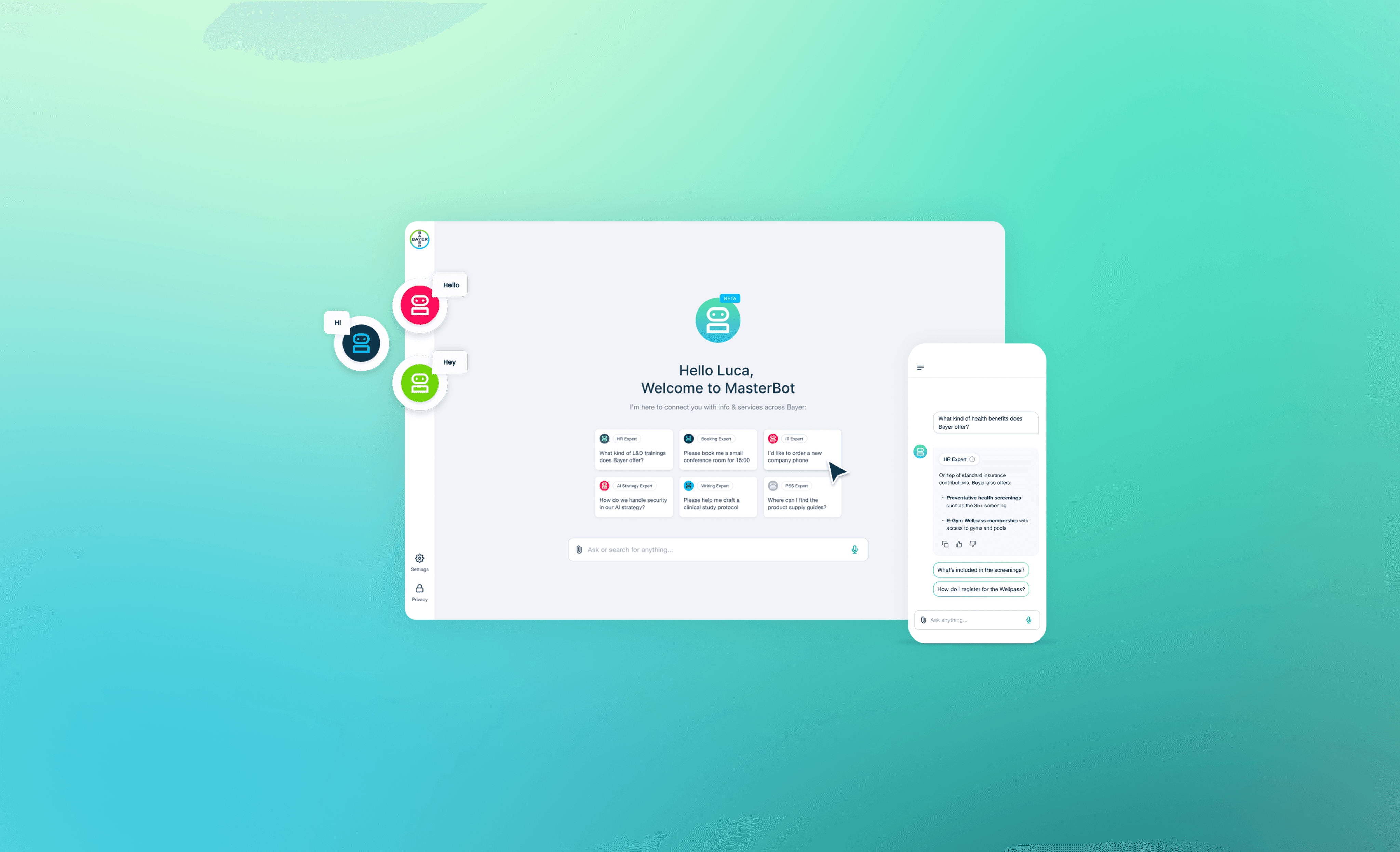
MasterBot is a scalable AI agent that unifies Bayer’s fragmented chatbot and tool landscape into a single chat interface, saving employees time by supporting questions and common business tasks.
Over the past couple years, Bayer has seen an explosion of new chatbots and employee tools popping up across its different functions and geographies. This fragmented approach leads to frustration and wasted time, as employees try to find the best chatbot for HR questions or the right tool for requesting leave or booking a conference room.
Over the past couple years, Bayer has seen an explosion of new chatbots and employee tools popping up across its different functions and geographies. This fragmented approach leads to frustration and wasted time, as employees try to find the best chatbot for HR questions or the right tool for requesting leave or booking a conference room.
Over the past couple years, Bayer has seen an explosion of new chatbots and employee tools popping up across its different functions and geographies. This fragmented approach leads to frustration and wasted time, as employees try to find the best chatbot for HR questions or the right tool for requesting leave or booking a conference room.
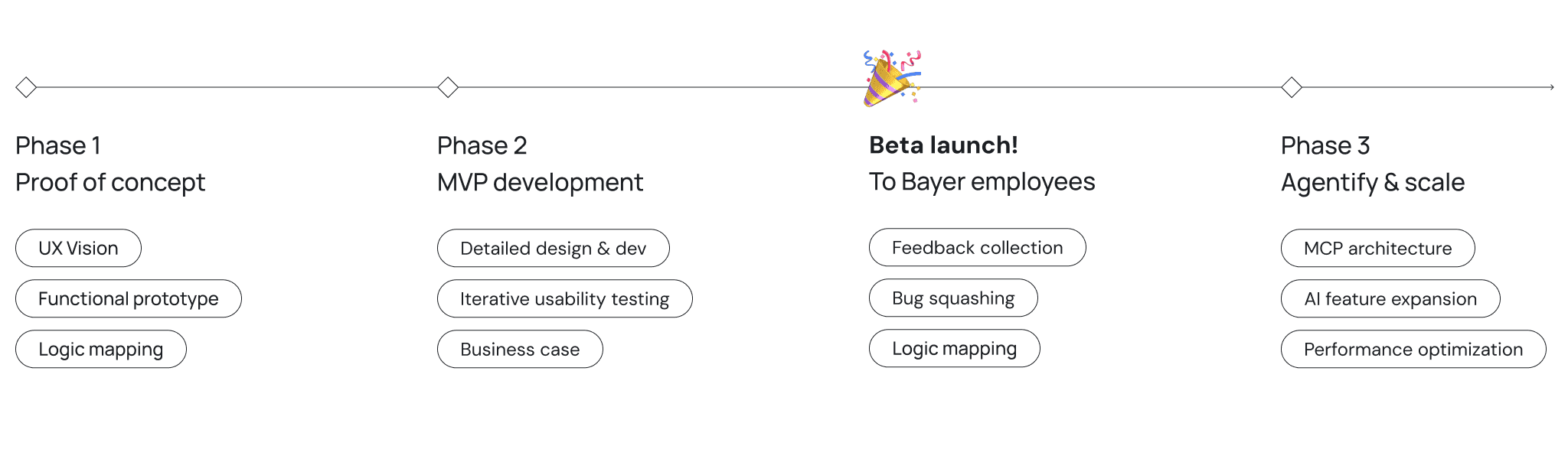
Starting in spring 2024, we helped Bayer envision and build an agentic app that brings multiple "childbots", knowledge repositories and business process tools together into a central conversational entry point. A one-stop-shop enterprise assistant.
Starting in spring 2024, we helped Bayer envision and build an agentic app that brings multiple "childbots", knowledge repositories and business process tools together into a central conversational entry point. A one-stop-shop enterprise assistant.
Starting in spring 2024, we helped Bayer envision and build an agentic app that brings multiple "childbots", knowledge repositories and business process tools together into a central conversational entry point. A one-stop-shop enterprise assistant.
Outcomes
12k
Active users
In the months following the MasterBot MVP launch, we saw many employees using the application at least twice a week.
70+k
Expected hours saved/year
By having a single central place for answers, employees don’t waste time jumping between different chatbots, tools and knowledge sources.
1.2M€
Service ticket savings/year
By increasing childbot traffic, MasterBot is expected to deflect more HR and IT service tickets, thereby increasing efficiency of front-office workers.
Team & Approach
MasterBot PO
Childbot team POs
UX Lead (me)
2 UX/UI Designers
LLM Engineer
FE & BE Developers
Cloud Architect
QA Tester
As the UX Lead, I set the design direction and was responsible for overall quality of delivery from our multi-disciplinary team.
- Co-defined the agentic logic that became the core product foundation
- Prototyped and tested new interaction models for conversational AI
- Managed 2 designers and coordinated a team of devs, architects and biz SMEs
- Facilitated close collaboration between the LLM engineer and designers
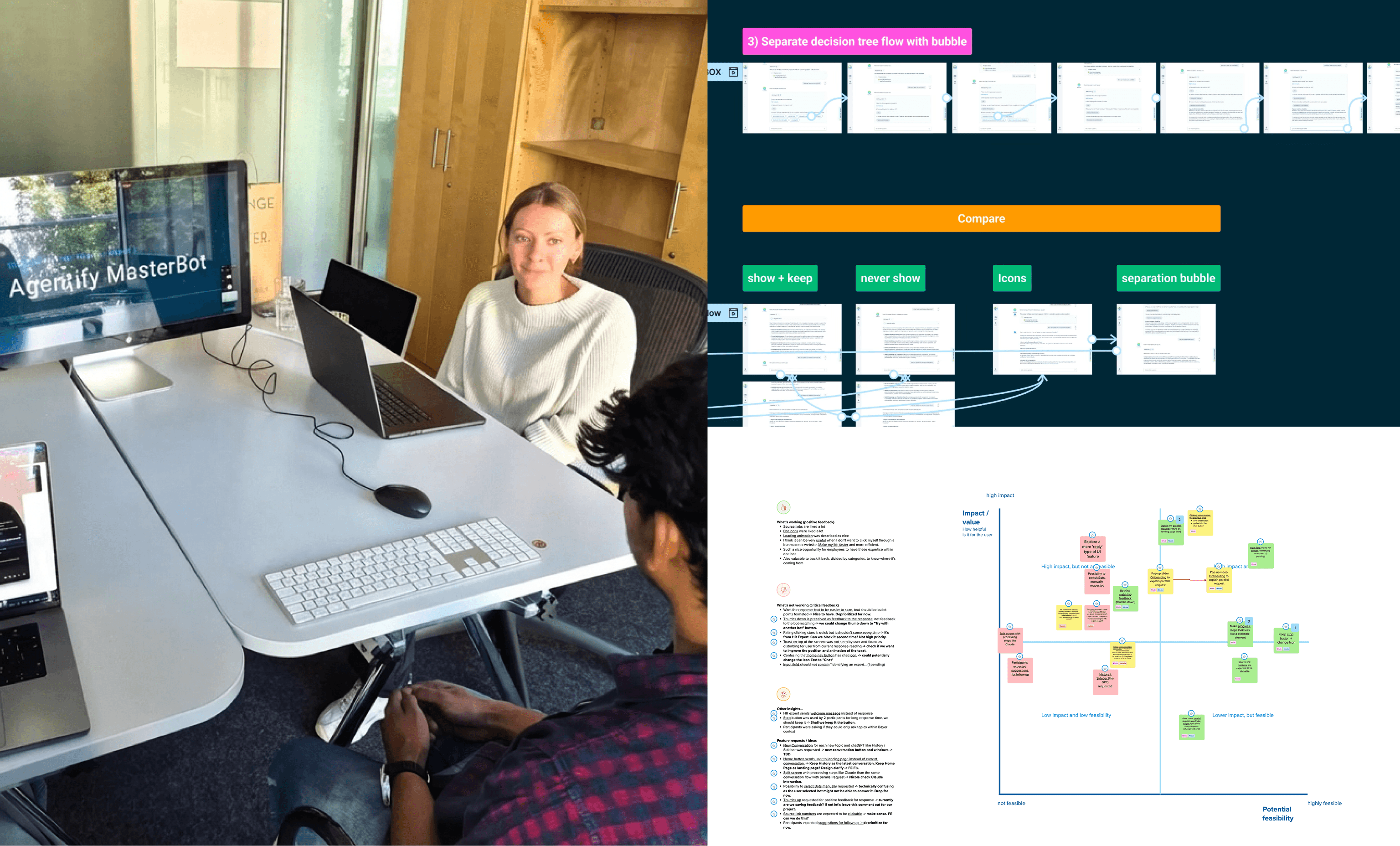
- Led research activities, including new methods for testing an AI app
- Facilitated MVP scoping and feature definition workshops
- Regularly presented work in front of VP-level stakeholders
The vision: A scalable agentic orchestrator
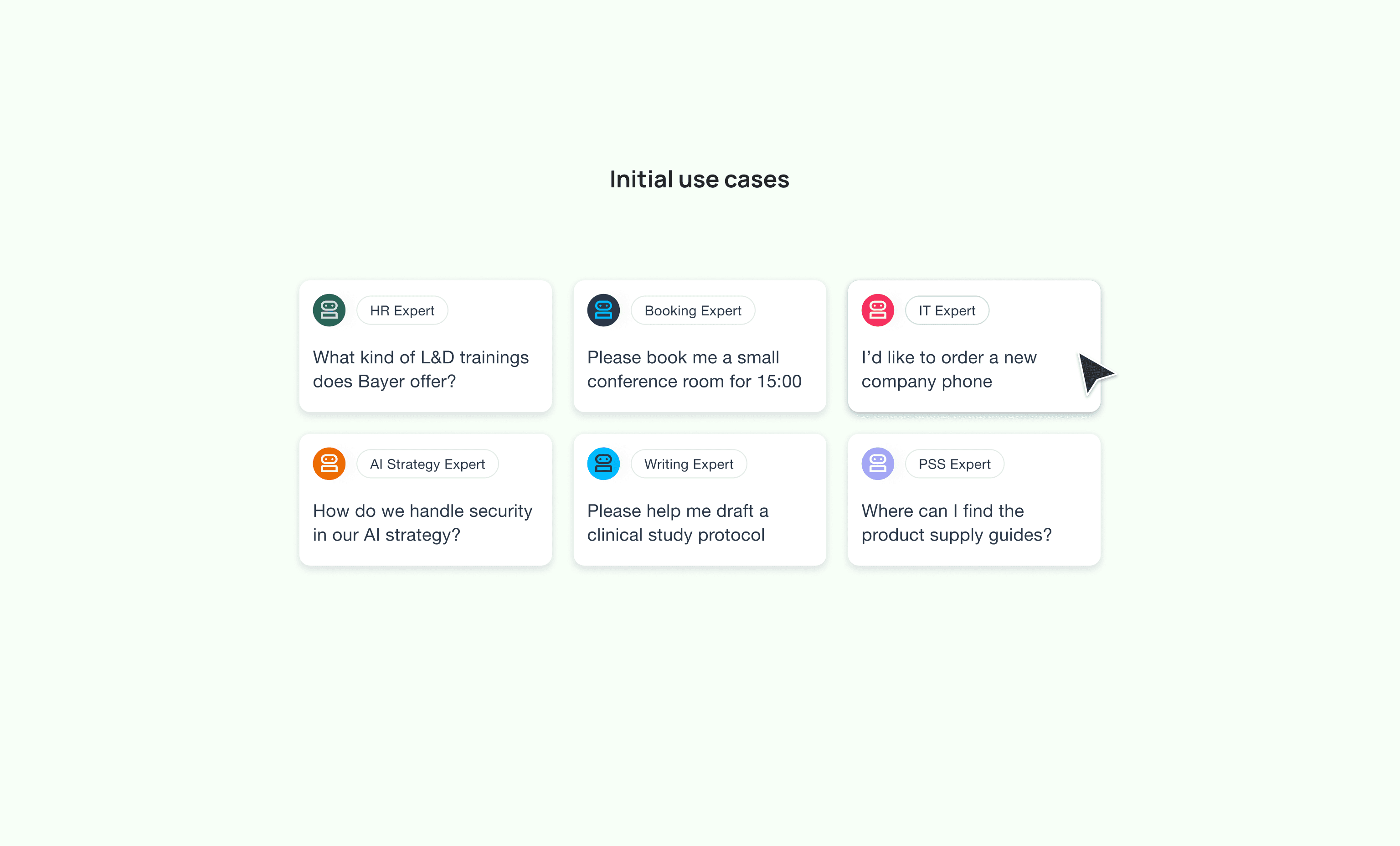
We agreed early on that MasterBot should be designed as a scalable framework, not a standalone app, so that teams could continue plugging in new chatbots or tools in the future. We worked with product owners across Bayer to prioritize which use cases to focus on first.
We agreed early on that MasterBot should be designed as a scalable framework, not a standalone app, so that teams could continue plugging in new chatbots or tools in the future. We worked with product owners across Bayer to prioritize which use cases to focus on first.
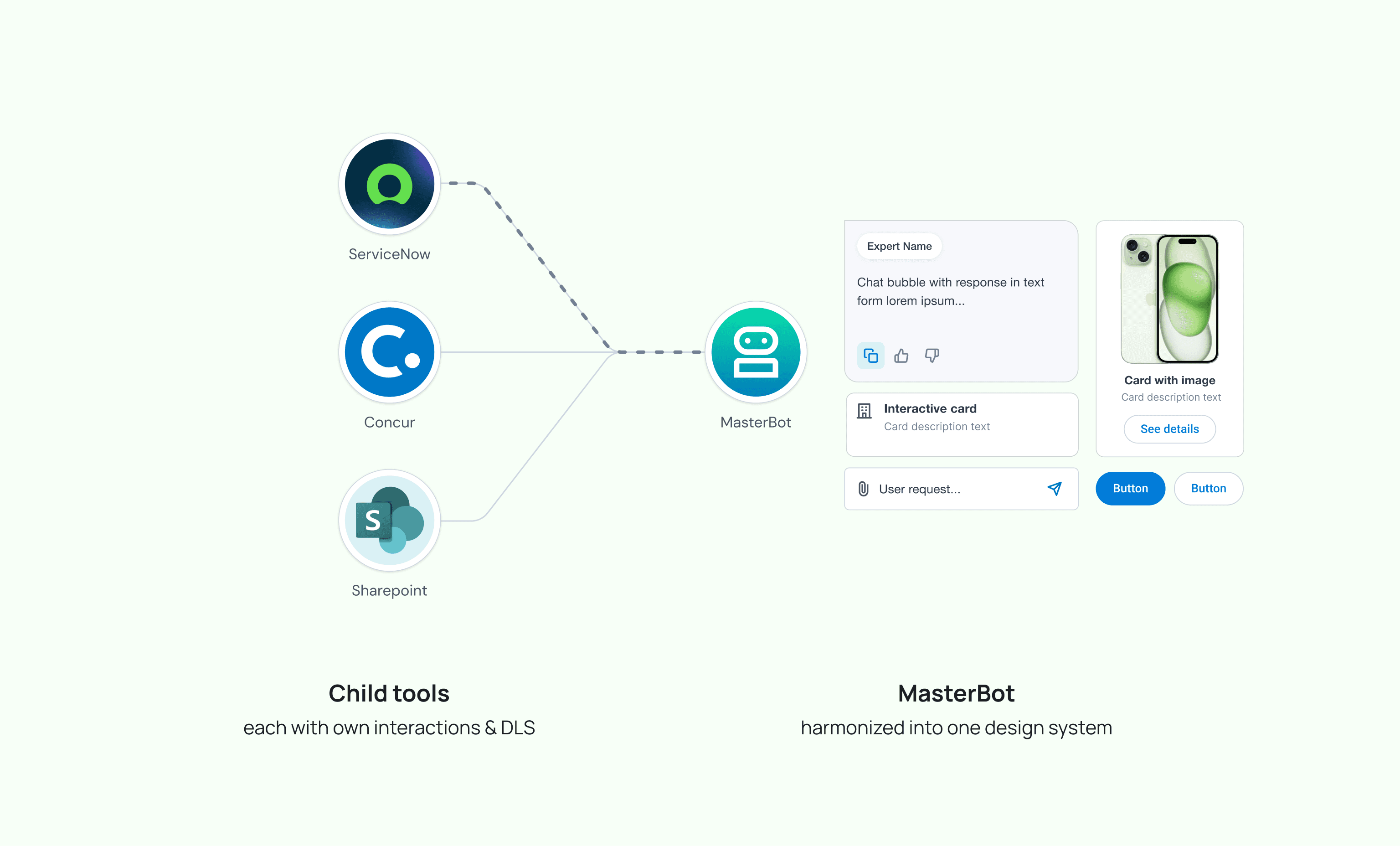
Integrating tools from different sub-teams meant managing a lot of business and technical dependencies. Some use cases could be handled through basic text responses. For others, we had to decide how to translate interactive tool components and behavior into a consistent UI system on the MasterBot side.
Redefining UX principles for AI
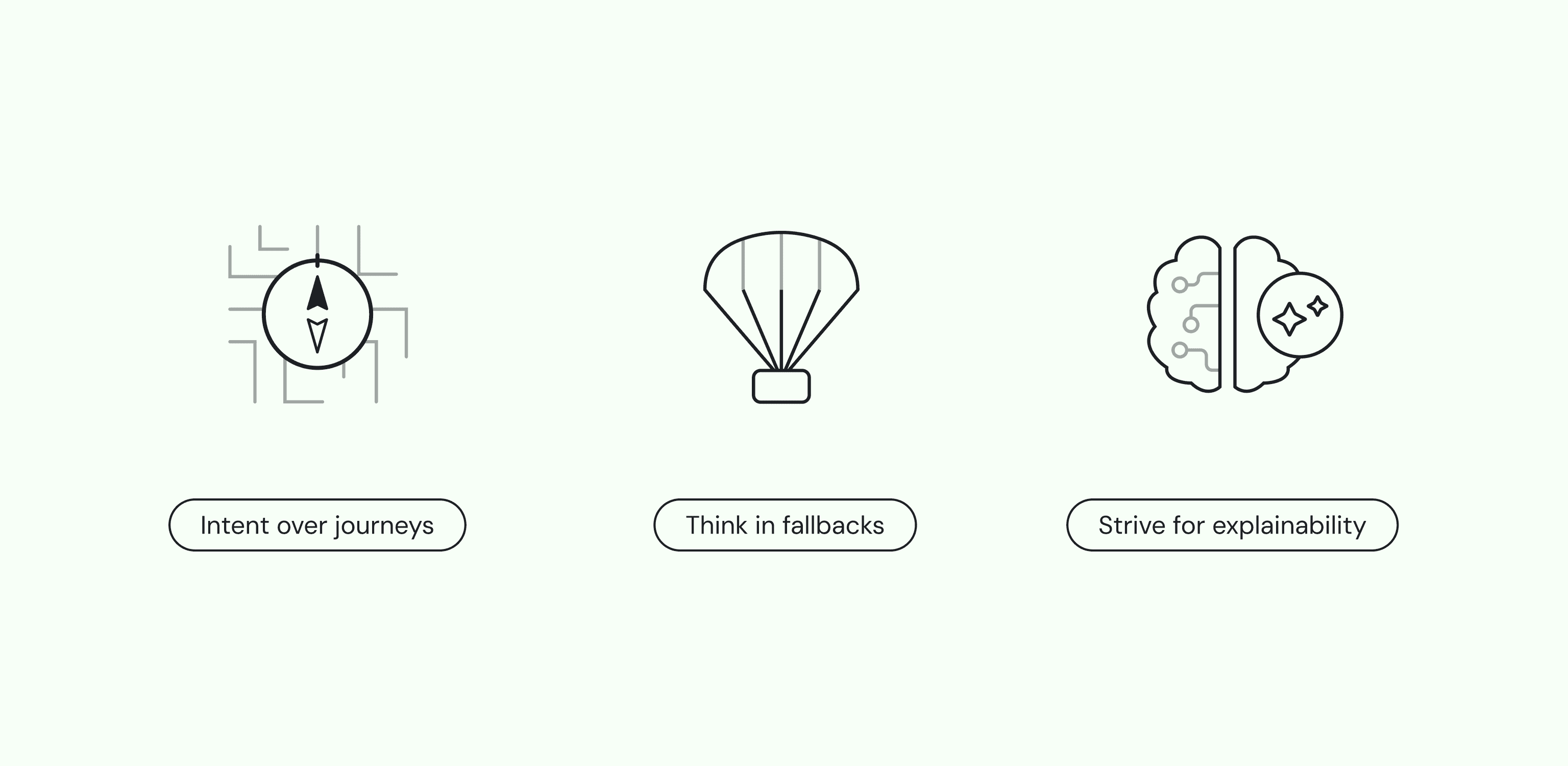
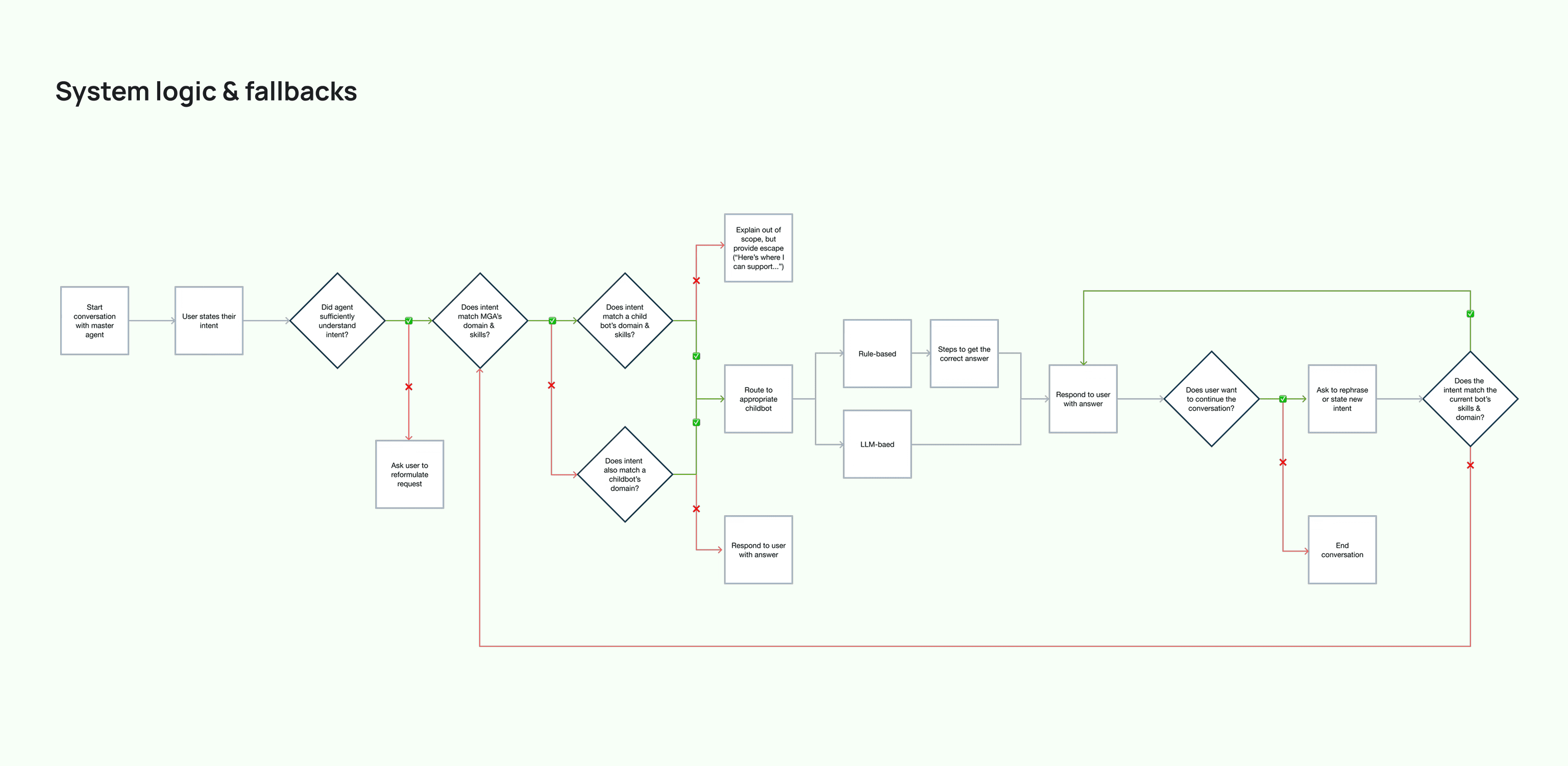
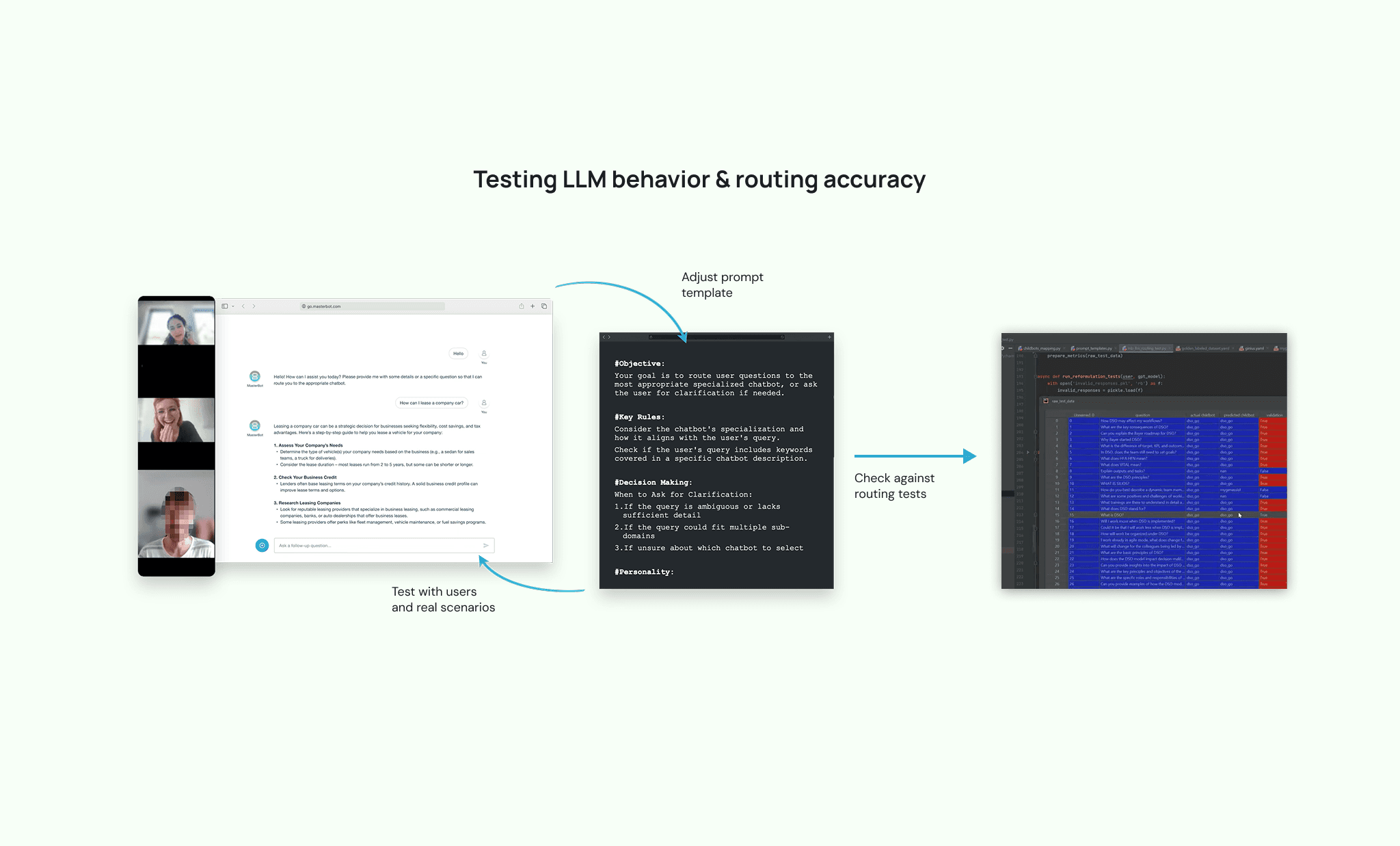
While some UX principles hold true across traditional and AI products, others had to be defined through experimentation. For example, shifting from a linear journey-based way of thinking to an intent-based approach meant that we couldn't just map out hero flows. Instead, we had to think through the system logic and design for fallbacks based on how the LLM model's understood the user's request.
While some UX principles hold true across traditional and AI products, others had to be defined through experimentation. For example, shifting from a linear journey-based way of thinking to an intent-based approach meant that we couldn't just map out hero flows. Instead, we had to think through the system logic and design for fallbacks based on how the LLM model's understood the user's request.
Testing interaction models
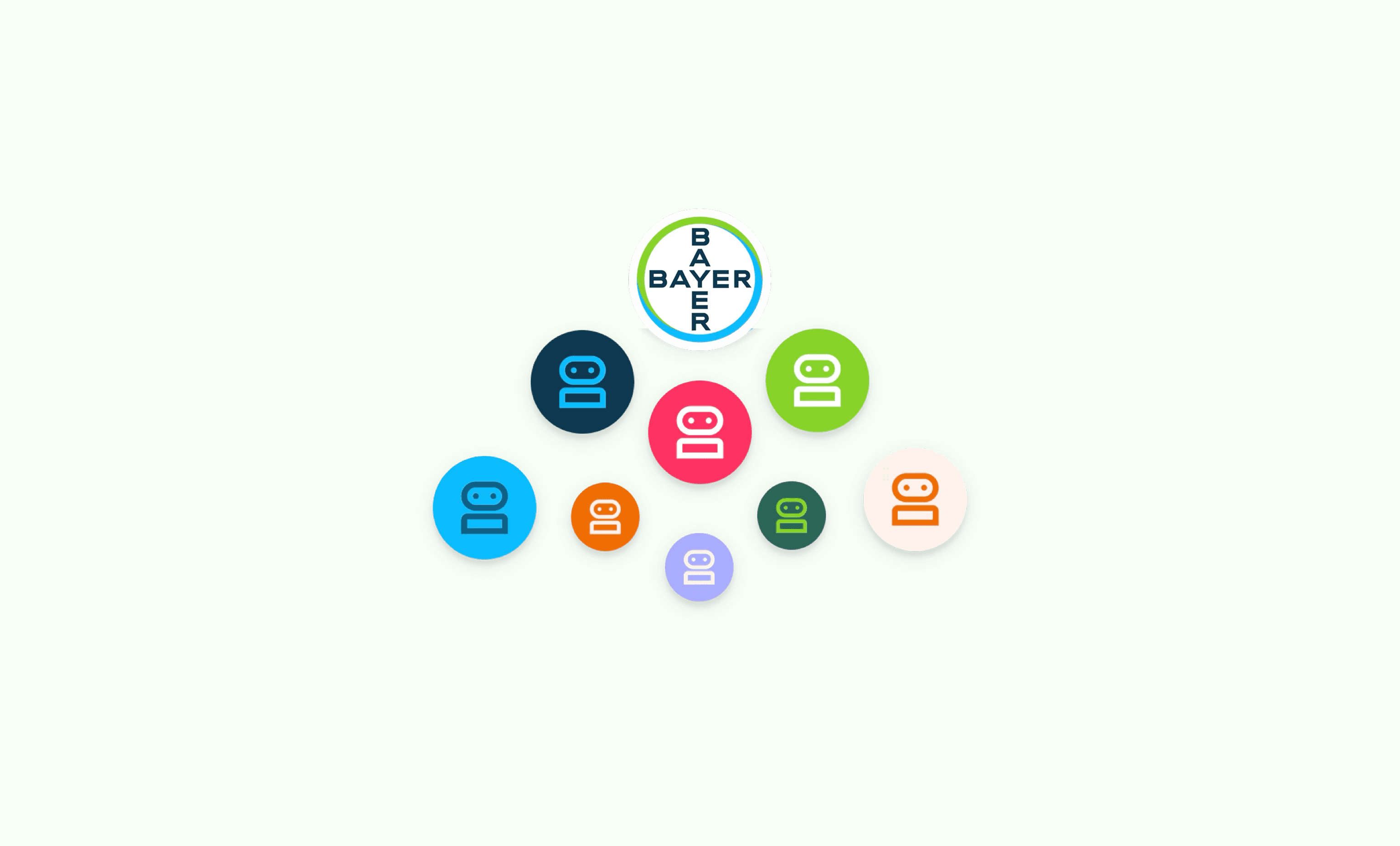
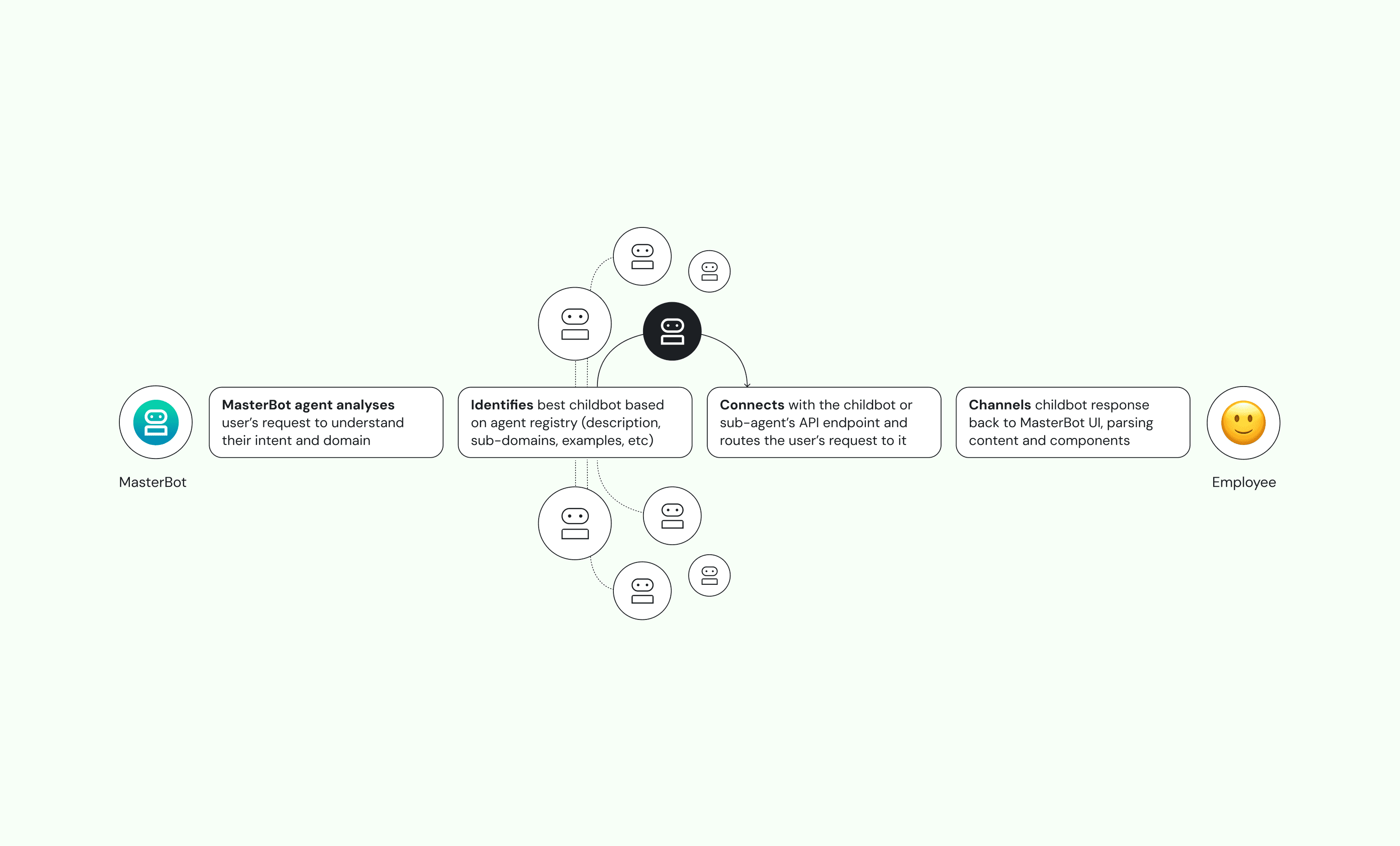
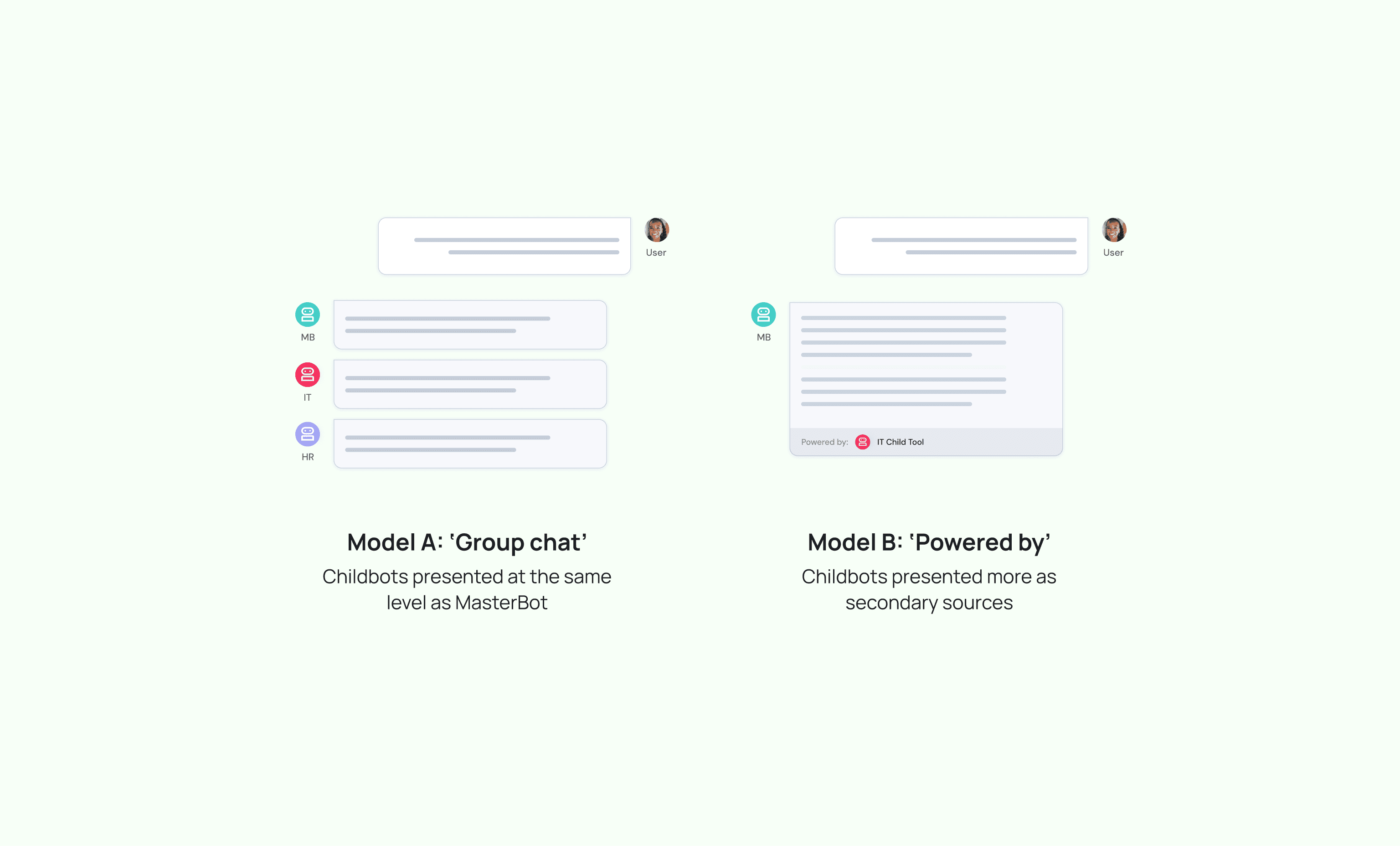
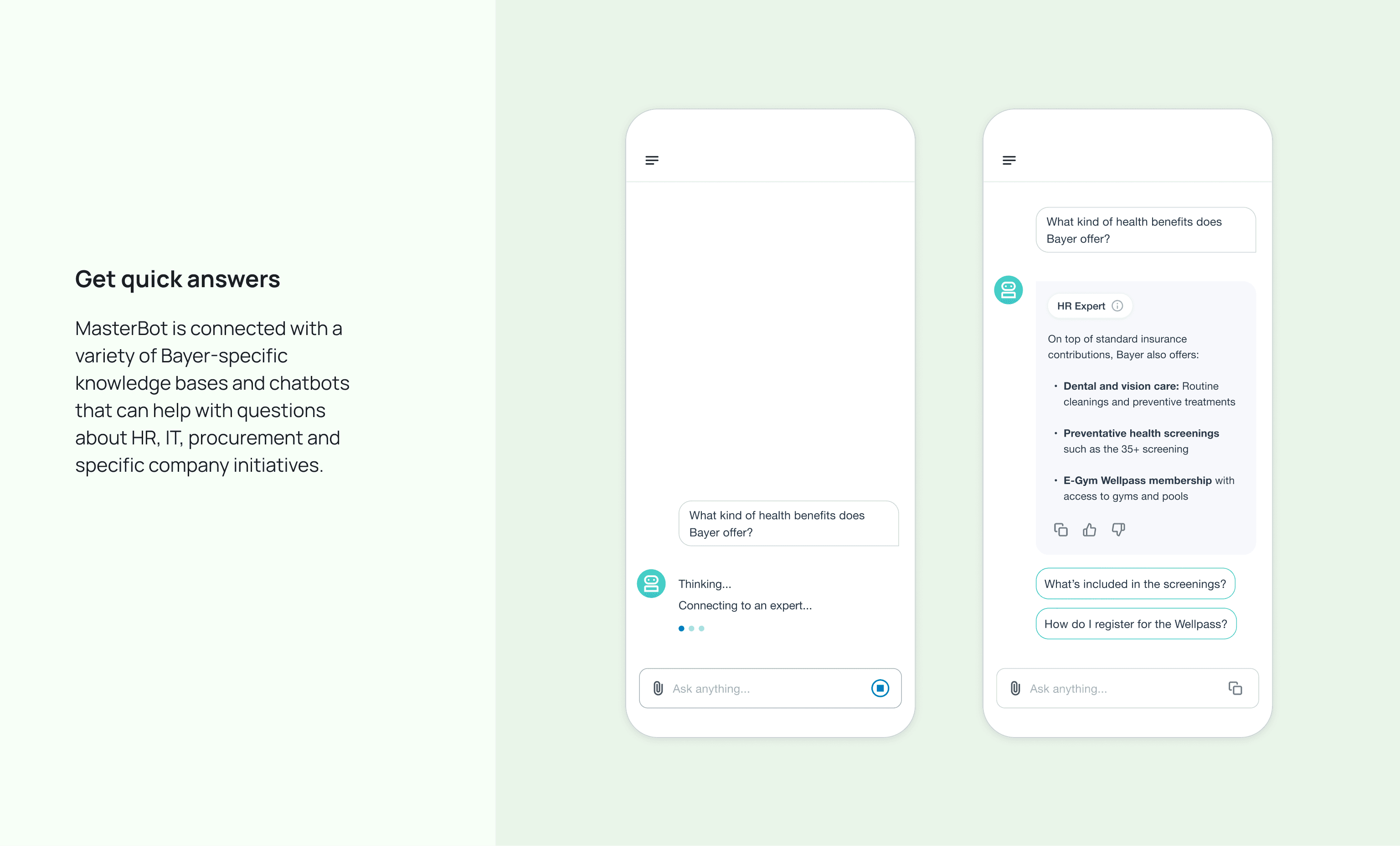
One of the biggest questions was how to visualize MasterBot’s role as a childbot orchestrator (not an all-knowing agent). Bayer wanted employees to understand this mental model in order to highlight the scaleability of the platform. We tested multiple mental models and decided to present connected childbots/tools as domain "experts" that took a secondary position in the UI, but reinforced the concept of MasterBot as an agentic orchestrator.
One of the biggest questions was how to visualize MasterBot’s role as a childbot orchestrator (not an all-knowing agent). Bayer wanted employees to understand this mental model in order to highlight the scaleability of the platform. We tested multiple mental models and decided to present connected childbots/tools as domain "experts" that took a secondary position in the UI, but reinforced the concept of MasterBot as an agentic orchestrator.
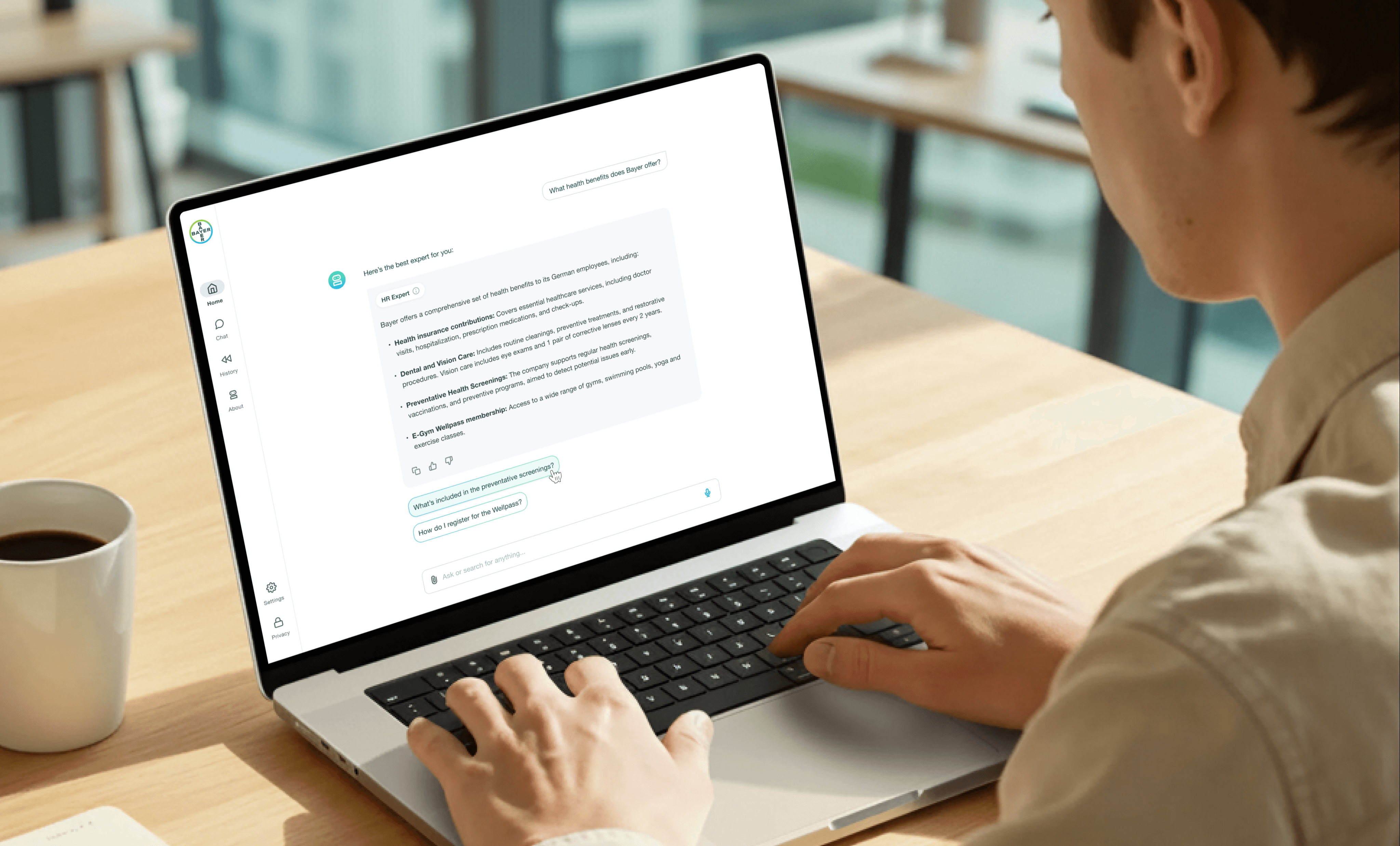
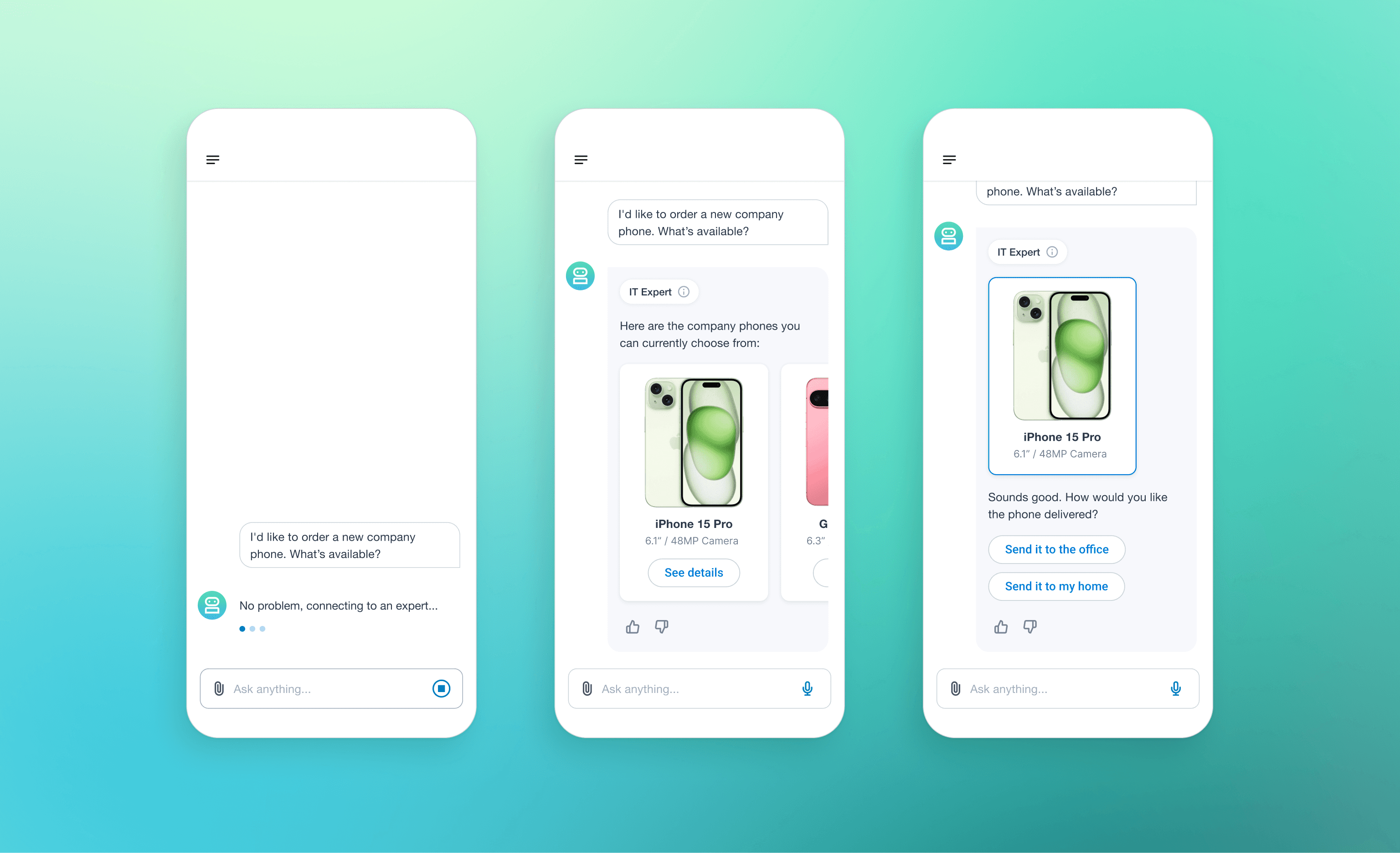
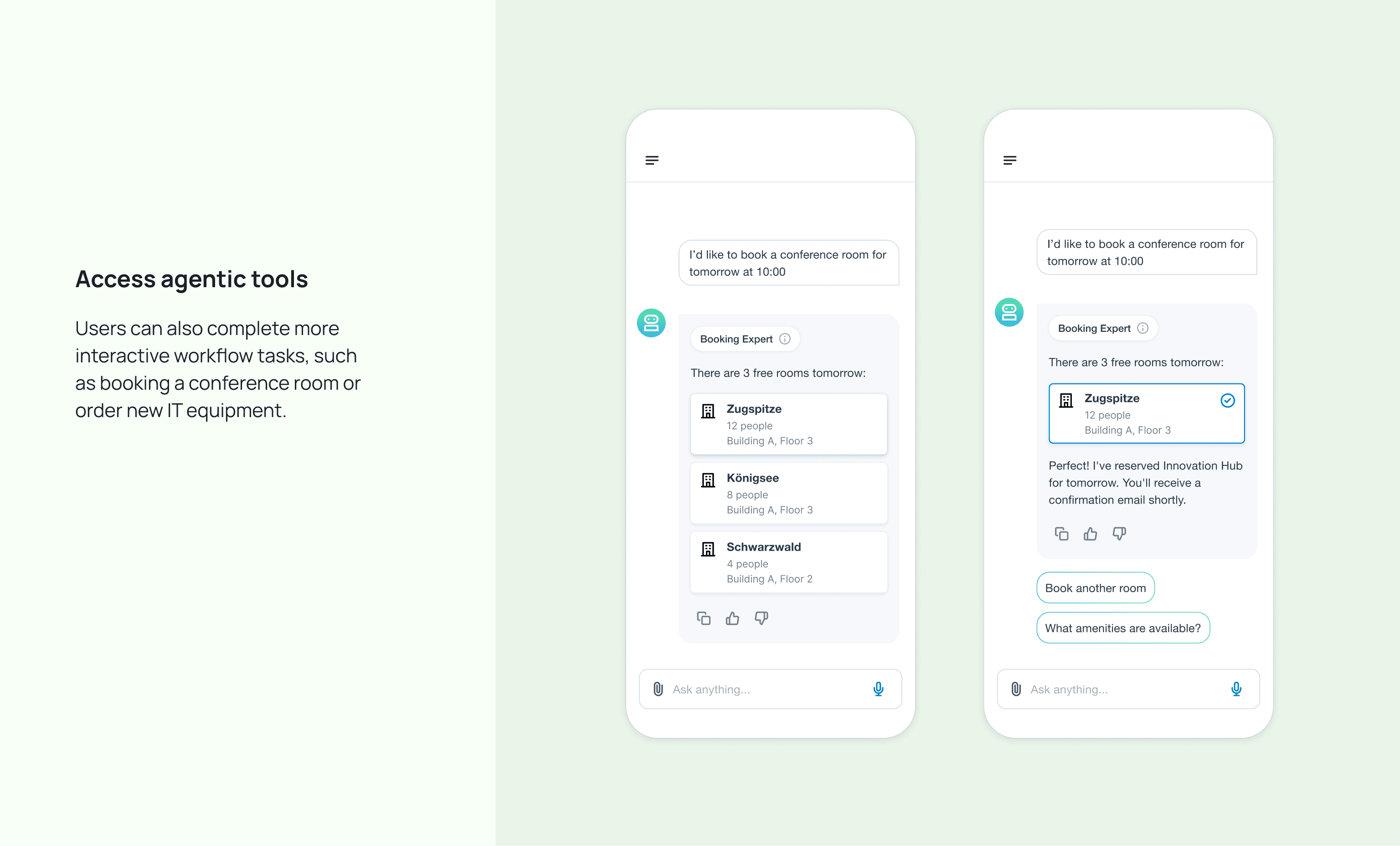
Based on the user’s request, MasterBot decides which “expert” to connect with. This enables employees to jump between different topics in a single chat thread. They can ask questions or actually complete more interactive workflows, such as booking a conference room or order new IT equipment.
Using n8n to accelerate research synthesis & Figma Make for quick prototyping
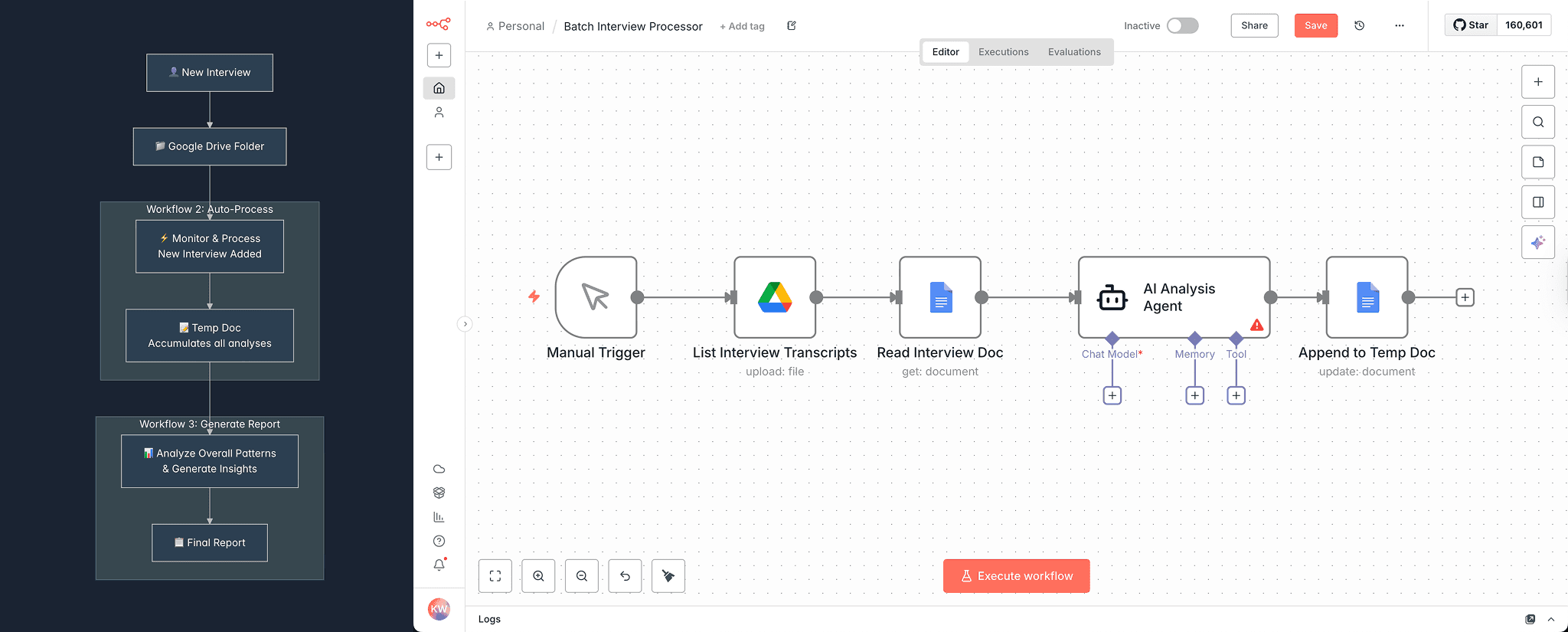
In the later rounds of user testing, we experimented with setting up an agentic automation workflow in n8n to transform multiple user interview transcripts into a draft insights report. When we dropped interview transcripts into a specific Google Drive folder, n8n would automatically analyze all interviews together to identify patterns across participants, and generate a research report draft with key pain points and recommendations.
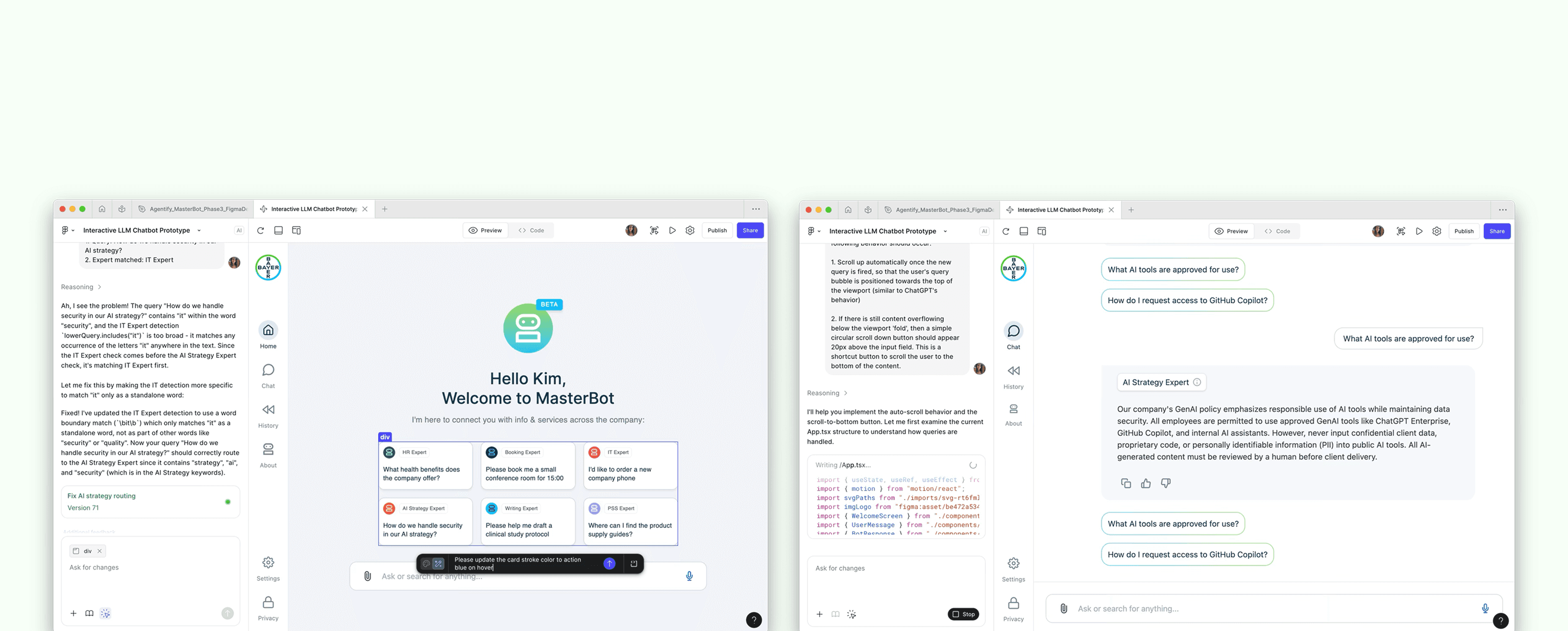
I also experimented with rebuilding MasterBot in Figma Make. Starting with two reference mockups and a good prompt, I managed to reach an 80% functional prototype within 4 hours (progress that had taken us weeks before). It helped to test more natural conversation flows and quickly play around with new features.
In the later rounds of user testing, we experimented with setting up an agentic automation workflow in n8n to transform multiple user interview transcripts into a draft insights report. When we dropped interview transcripts into a specific Google Drive folder, n8n would automatically analyze all interviews together to identify patterns across participants, and generate a research report draft with key pain points and recommendations.
I also experimented with rebuilding MasterBot in Figma Make. Starting with two reference mockups and a good prompt, I managed to reach an 80% functional prototype within 4 hours (progress that had taken us weeks before). It helped to test more natural conversation flows and quickly play around with new features.
“It’s really impressive what came out. It’s opening the door to bring more intelligence in... We learned what really happens in Agile development, not just in PowerPoint.”
Head of AI Platforms, Bayer