Global Life Sciences Client
Enterprise Web App (1 year)
Predict: Reinventing the art of insight-scouting
This global life science company invests huge resources to identify new trends, partners and investment opportunities across its different business divisions.
The process is time-consuming and inefficient, with hours spent scouring exponentially growing amounts of siloed data across Pharma, Crop Science and Consumer Health.
The process is time-consuming and inefficient, with hours spent scouring exponentially growing amounts of siloed data across Pharma, Crop Science and Consumer Health.
The process is time-consuming and inefficient, with hours spent scouring exponentially growing amounts of siloed data across Pharma, Crop Science and Consumer Health.
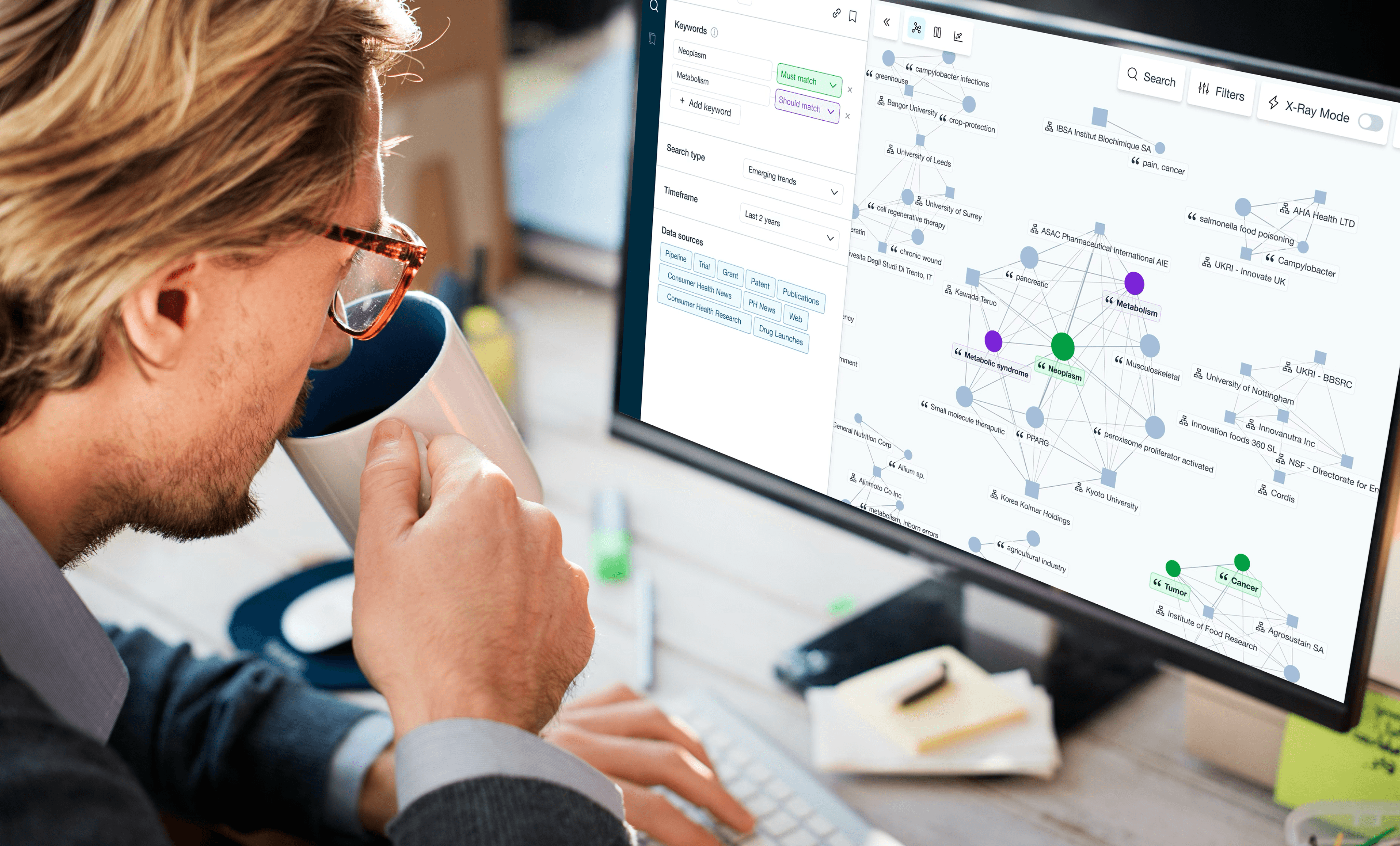
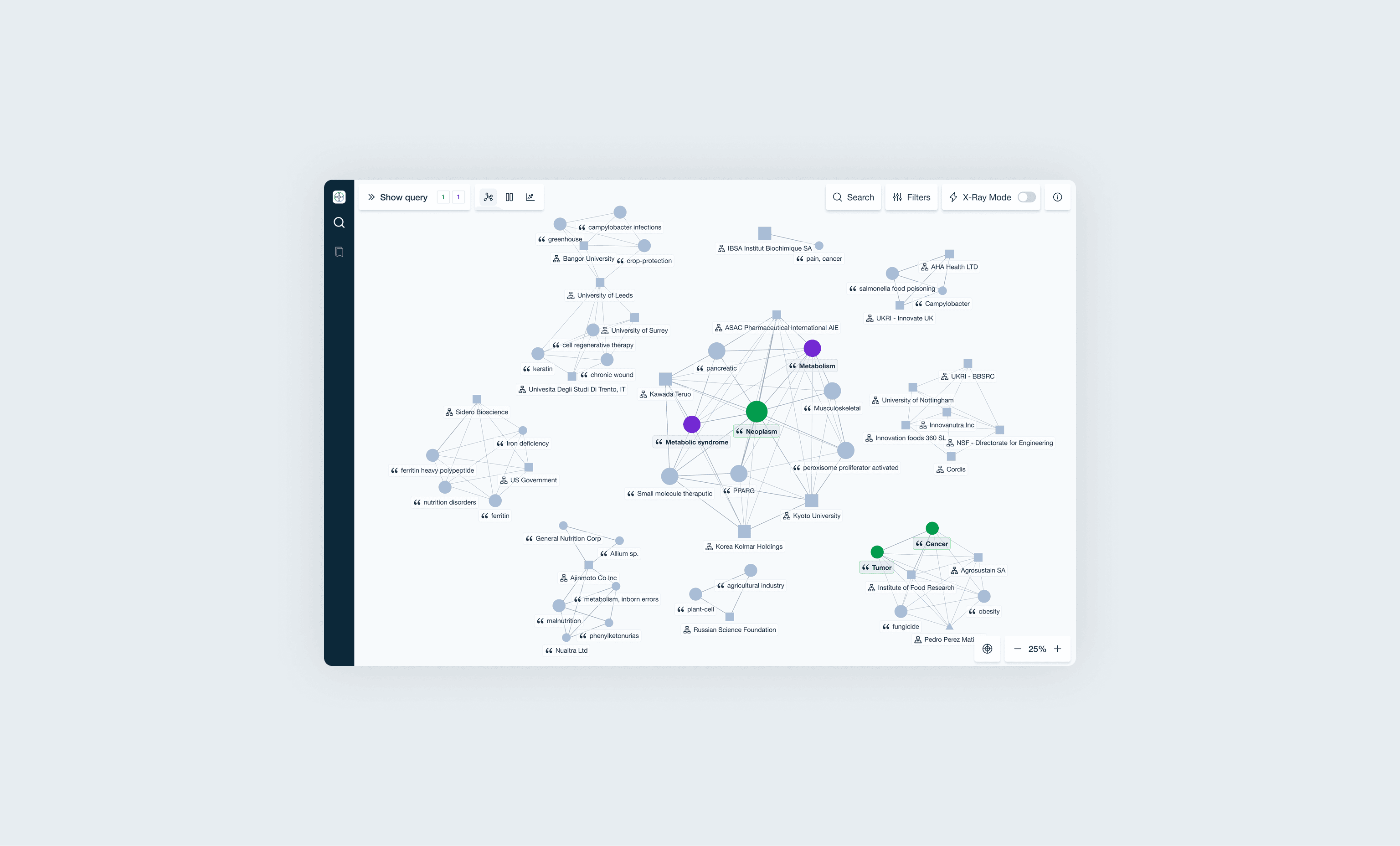
Our team delivered an AI-powered web tool that reinvents insight-scouting by harmonizing data from 40+ sources into one interactive network. It highlights the hidden connections between research topics, key opinion leaders and organizations to save researchers significant time.
Our team delivered an AI-powered web tool that reinvents insight-scouting by harmonizing data from 40+ sources into one interactive network. It highlights the hidden connections between research topics, key opinion leaders and organizations to save researchers significant time.
Our team delivered an AI-powered web tool that reinvents insight-scouting by harmonizing data from 40+ sources into one interactive network. It highlights the hidden connections between research topics, key opinion leaders and organizations to save researchers significant time.
Outcomes
40+
Data sources
The product harmonized public data from 40+ data sources in 8 dataset, which incl. Literature, Patent, Clinical Trials, Pipelines, Funds, News, Company Website.
80%
Reduction in research time
The product enabled colleagues to shorten their research time from weeks to days, as described by several regular users within the organisation.
100+
Stakeholders engaged
Through research, roadshow and MVP development, more than 100 client colleagues were exposed to our work, making Predict a lighthouse innovation project in its result and approach.
Team & Approach
Product Owner
UX Lead (me)
UI Designer
LLM Engineer
FE & BE Developers
Solution Architect
Domain SMEs
As the UX Lead, I set the design direction, oversaw our cross-disciplinary team and took on product management responsibilities:
- Ran the UX/UI workstream (hands-on and managing 2 designers)
- Defined new interaction models for this type of research tool
- Acted as primary sparring partner for the PO
- Led foundational and usability research activities
- Facilitated MVP scoping and feature definition workshops
- Regularly presented work in front of VP-level stakeholders
Defining the product vision
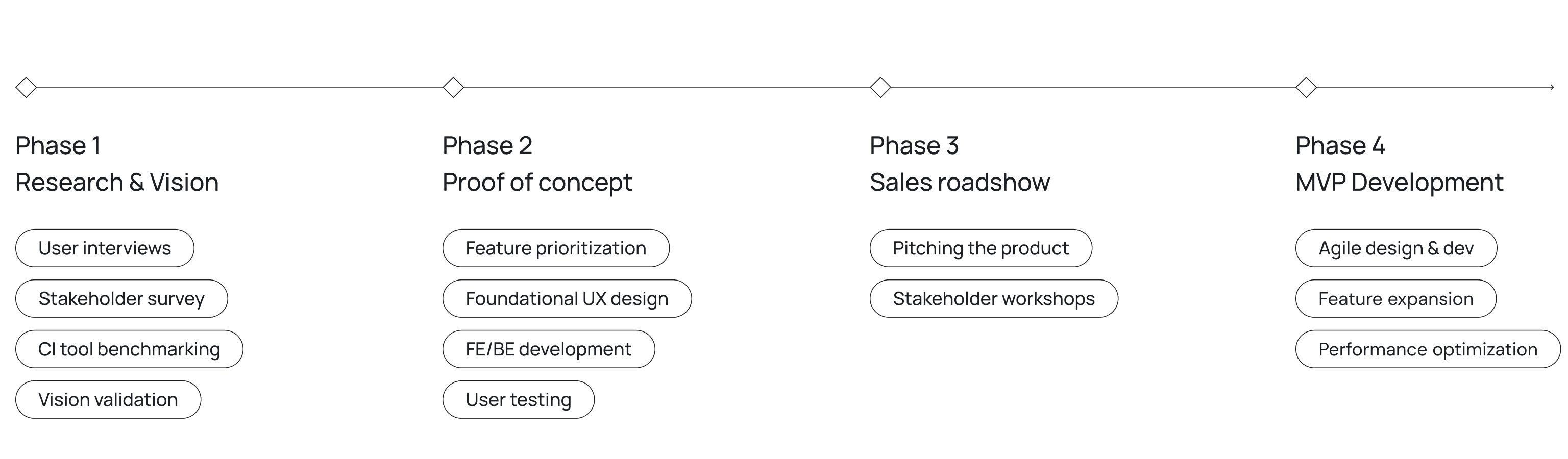
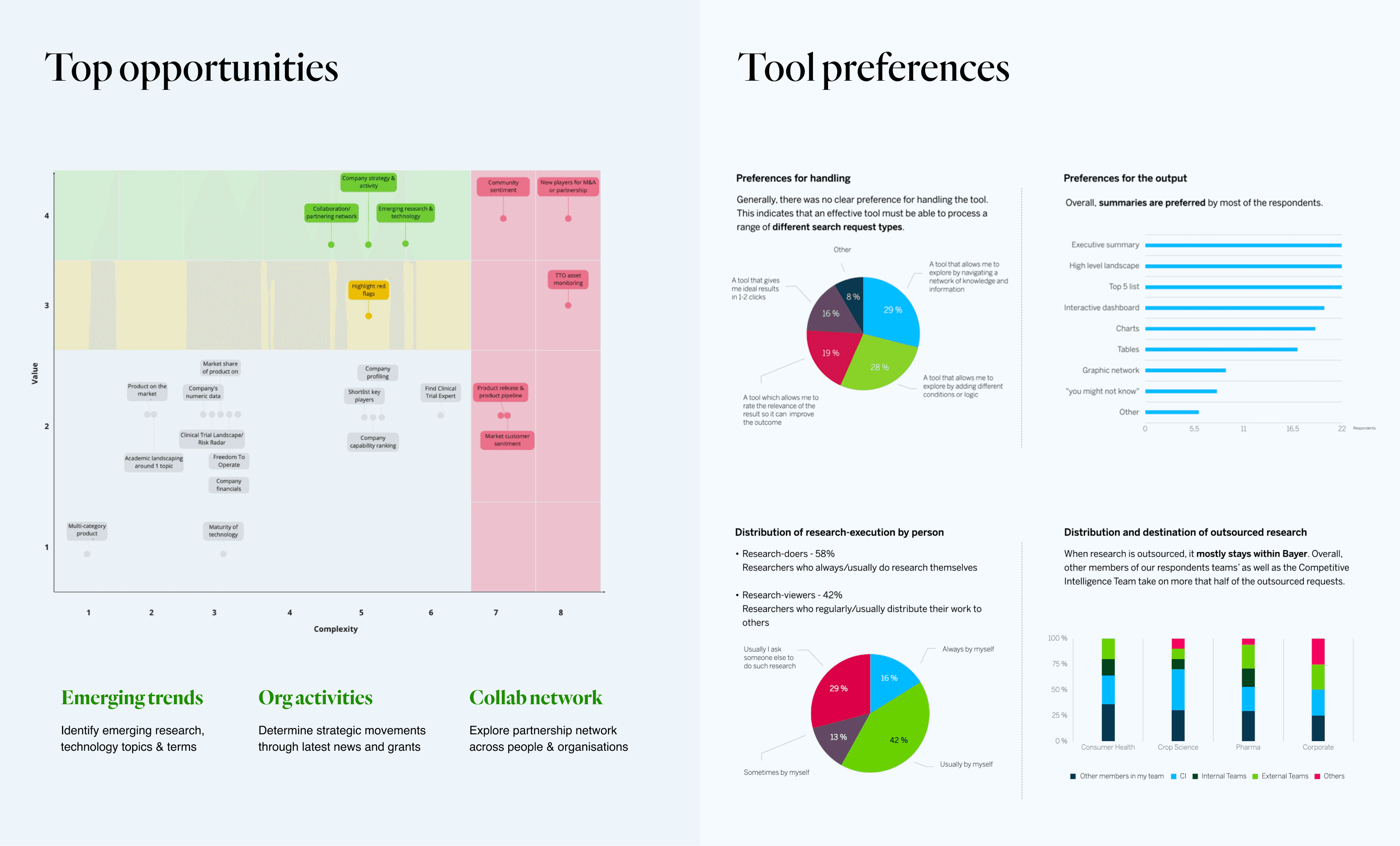
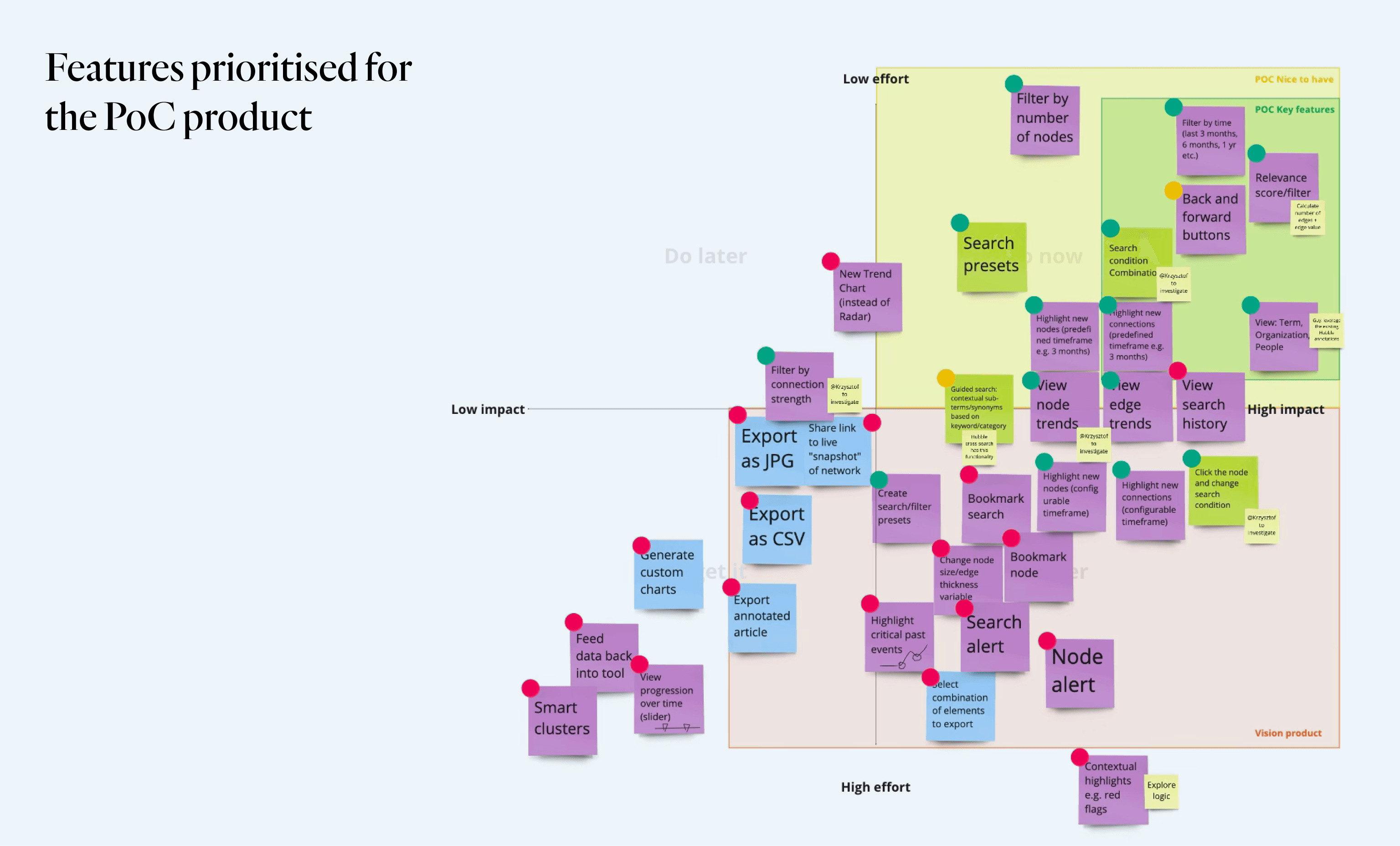
Before building the initial PoC, I led interviews with researchers and other roles at the company to understand their current workflows and where they saw opportunities for a new competitive intelligence tool. We translated these insights into potential product directions and prioritised an initial feature set for the proof of concept product.
Before building the initial PoC, I led interviews with researchers and other roles at the company to understand their current workflows and where they saw opportunities for a new competitive intelligence tool. We translated these insights into potential product directions and prioritised an initial feature set for the proof of concept product.
Exploring less traditional interaction models
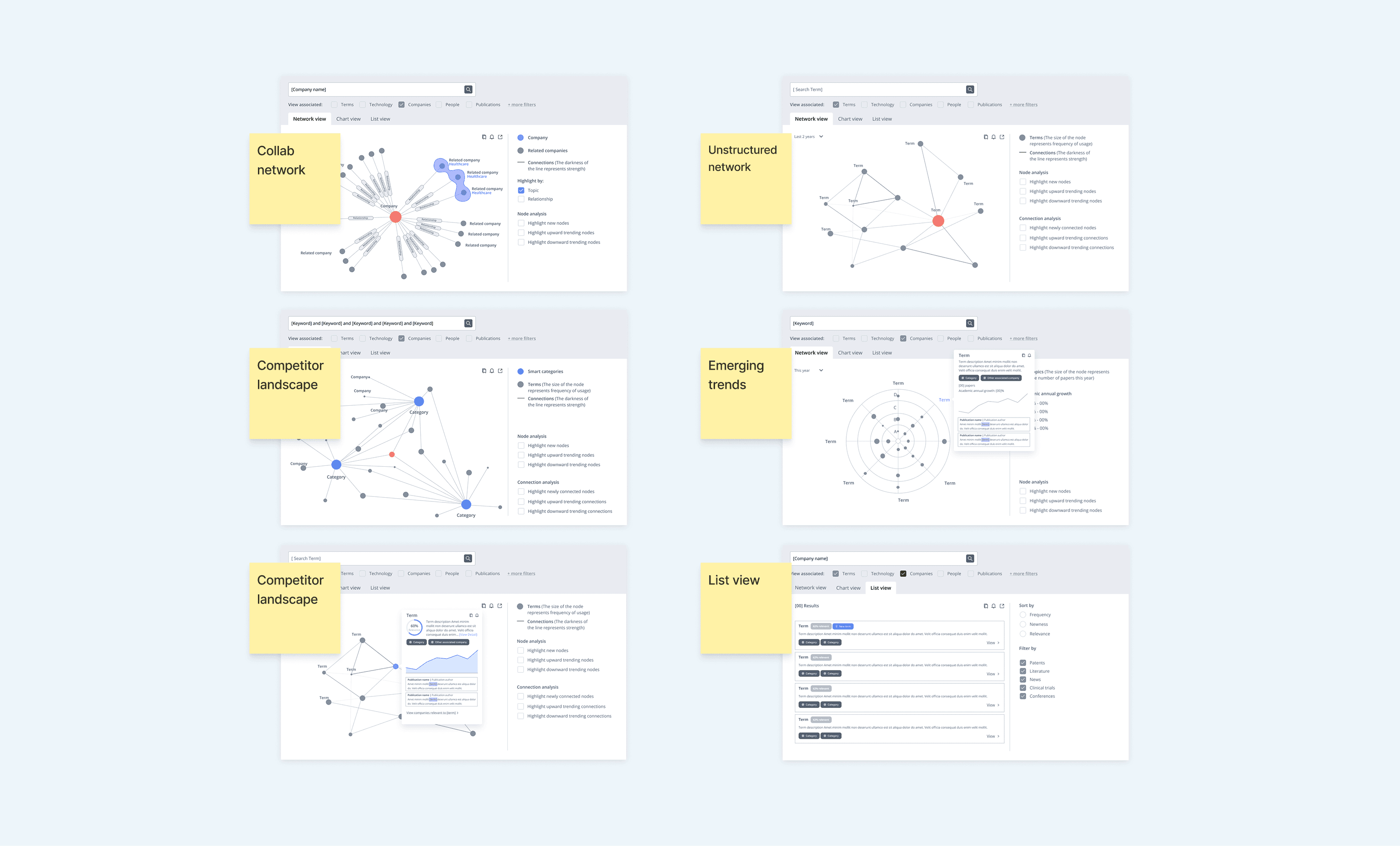
Based on the top needs that came out of discovery research, we tested several different ways to visualize collaboration networks, emerging trends, and organizational activities.
Based on the top needs that came out of discovery research, we tested several different ways to visualize collaboration networks, emerging trends, and organizational activities.
Working with data science on views that highlight new trends and insights at a glance
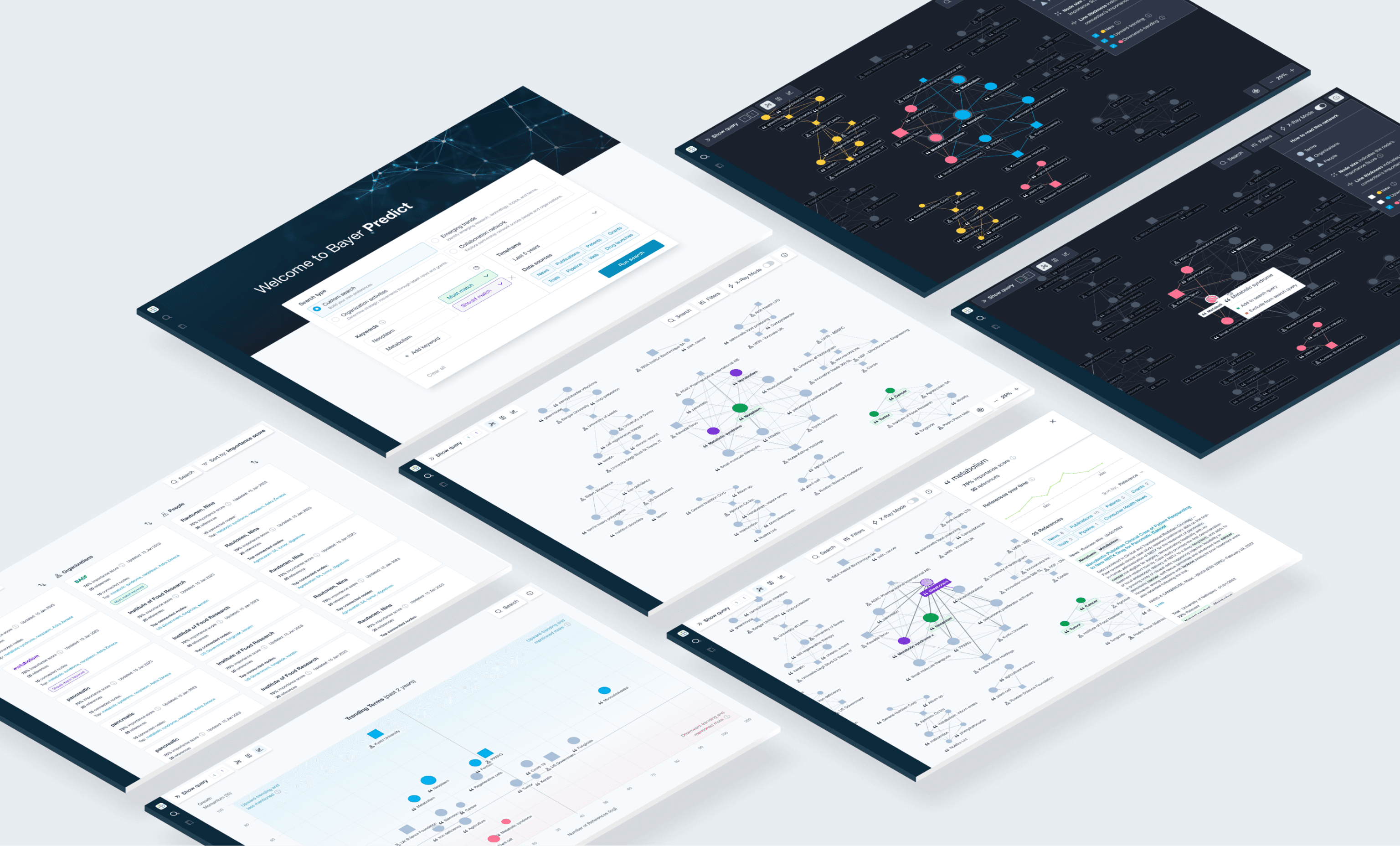
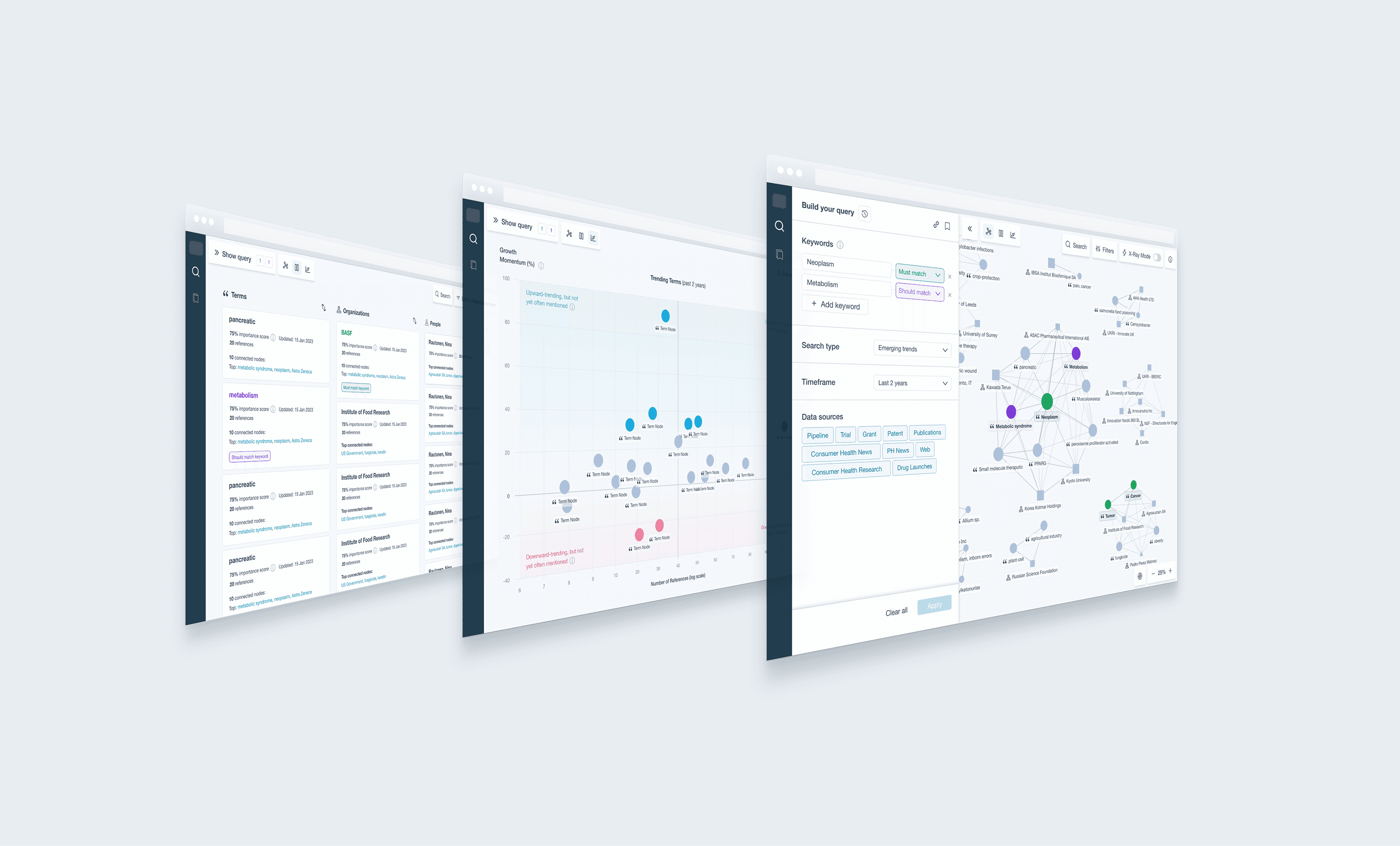
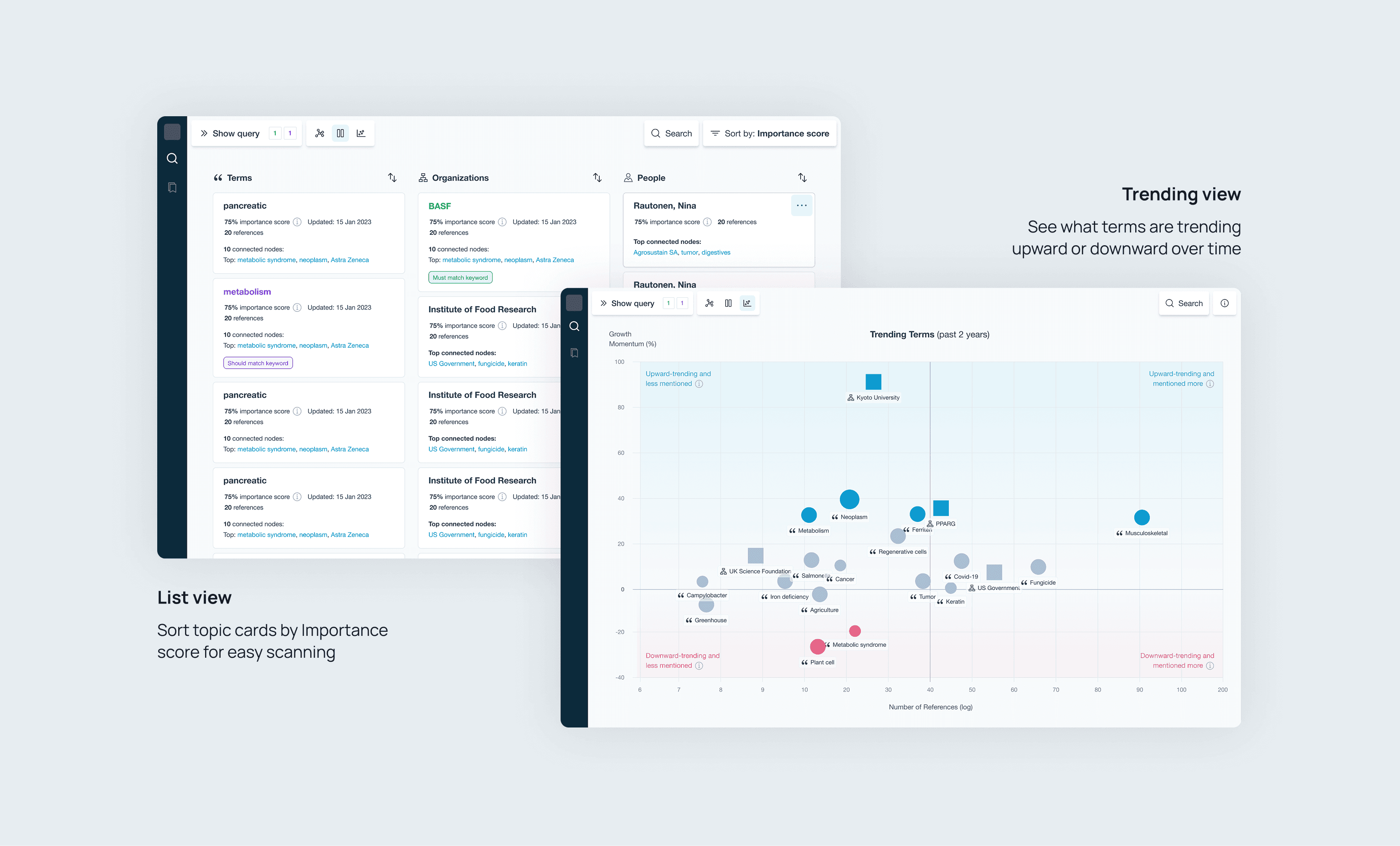
The true measure of Predict’s success was whether the tool could help researchers cut through the noise and discover new domain connections that they were dedicating weeks to researching today. Starting with a search input on the landing page, users can then explore the results in a network view, list view or trending graph view.
The true measure of Predict’s success was whether the tool could help researchers cut through the noise and discover new domain connections that they were dedicating weeks to researching today. Starting with a search input on the landing page, users can then explore the results in a network view, list view or trending graph view.
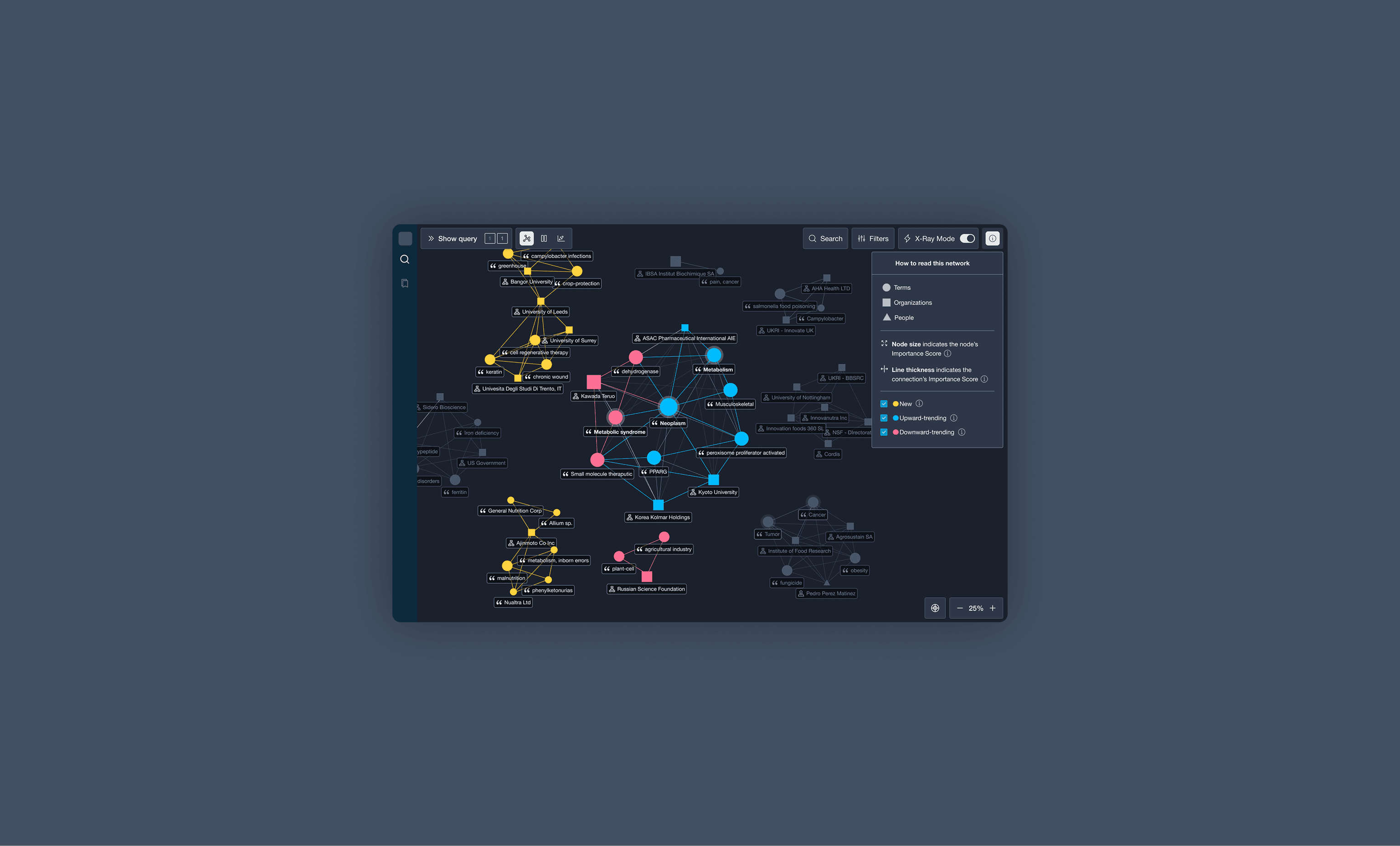
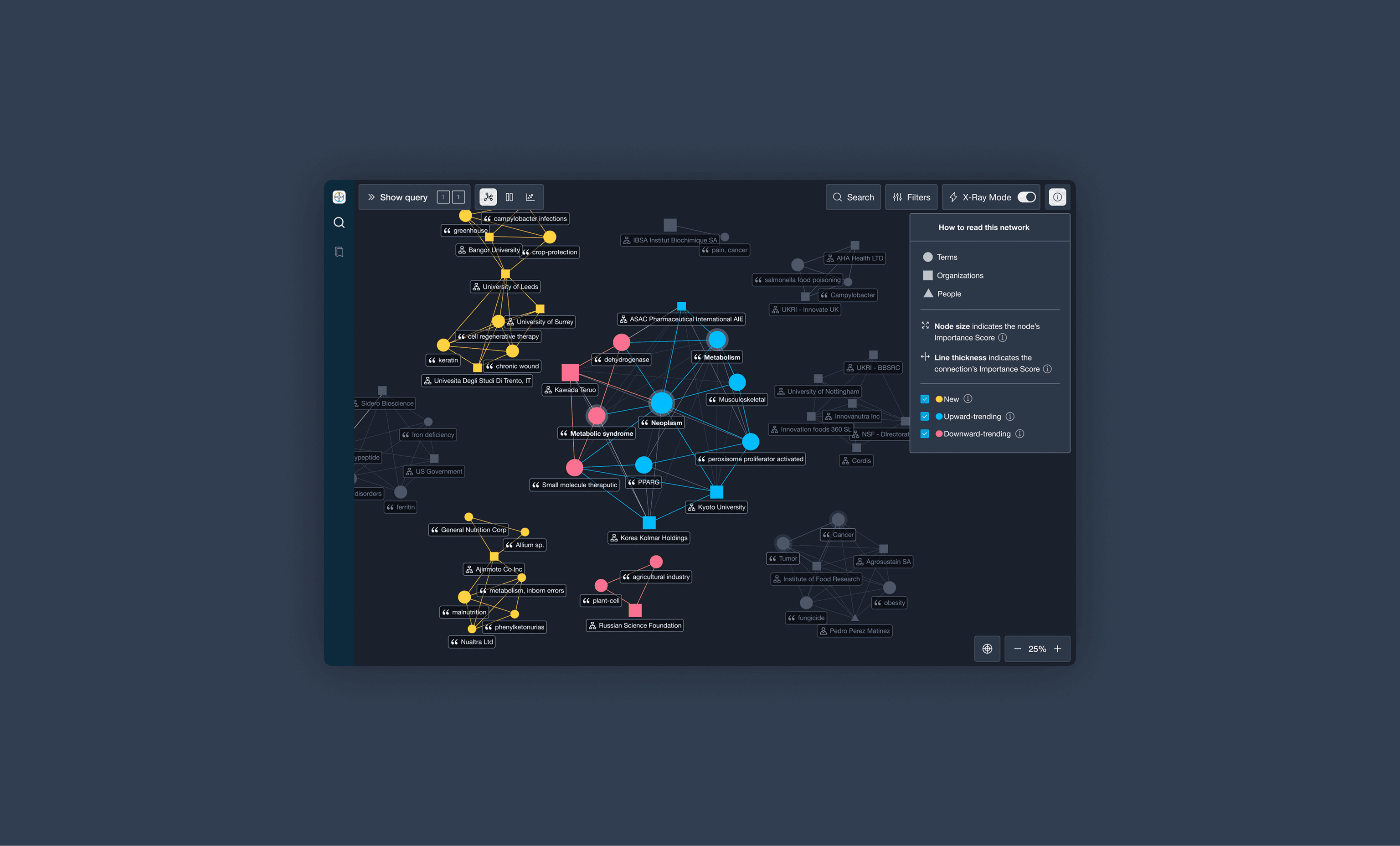
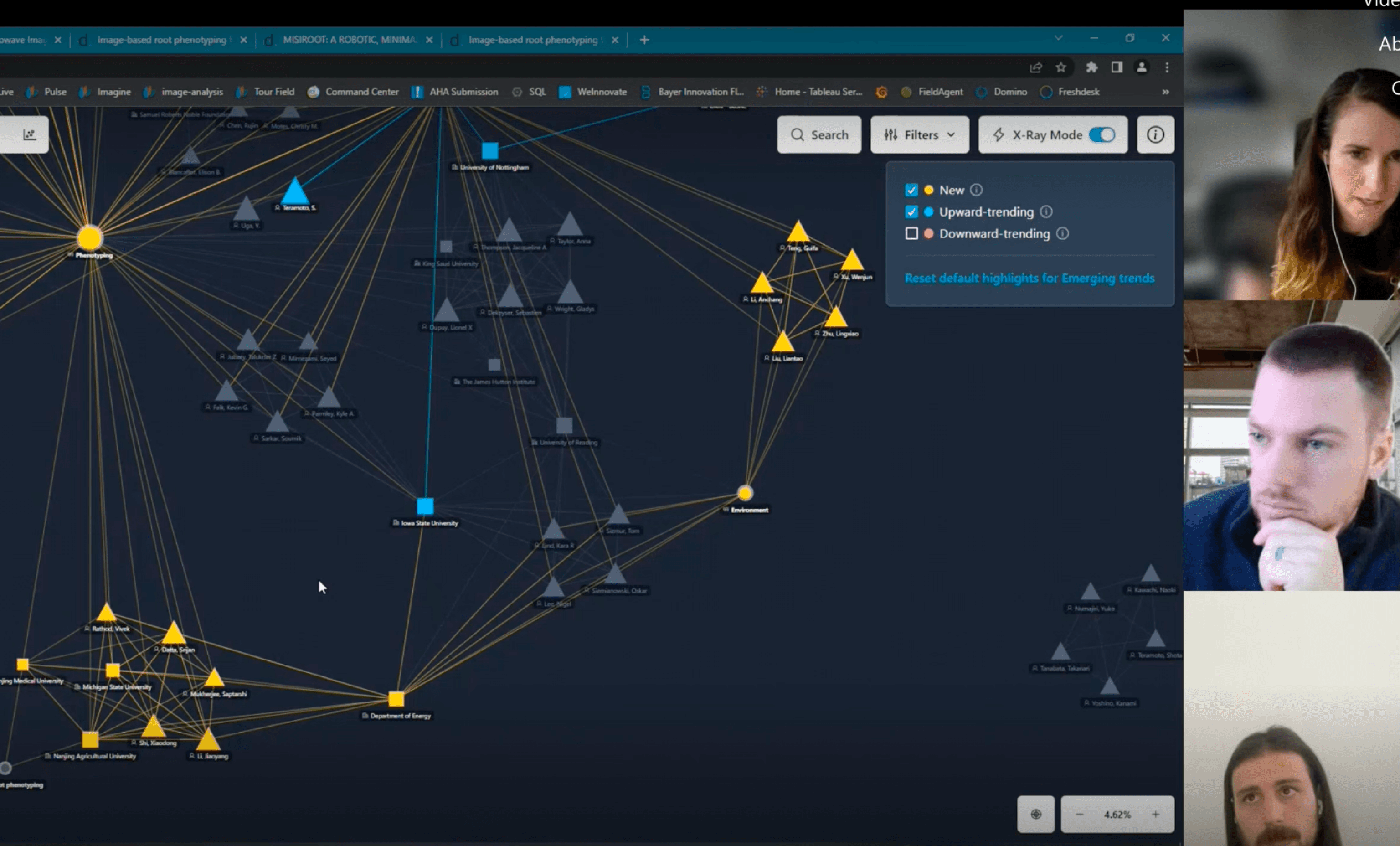
X-Ray Mode: Switching between the default network view and the darker 'x-ray mode' helps users spot other types of patterns in the data, such as new trends (yellow), upward-trending topics (blue) or downward-trending topics (pink).
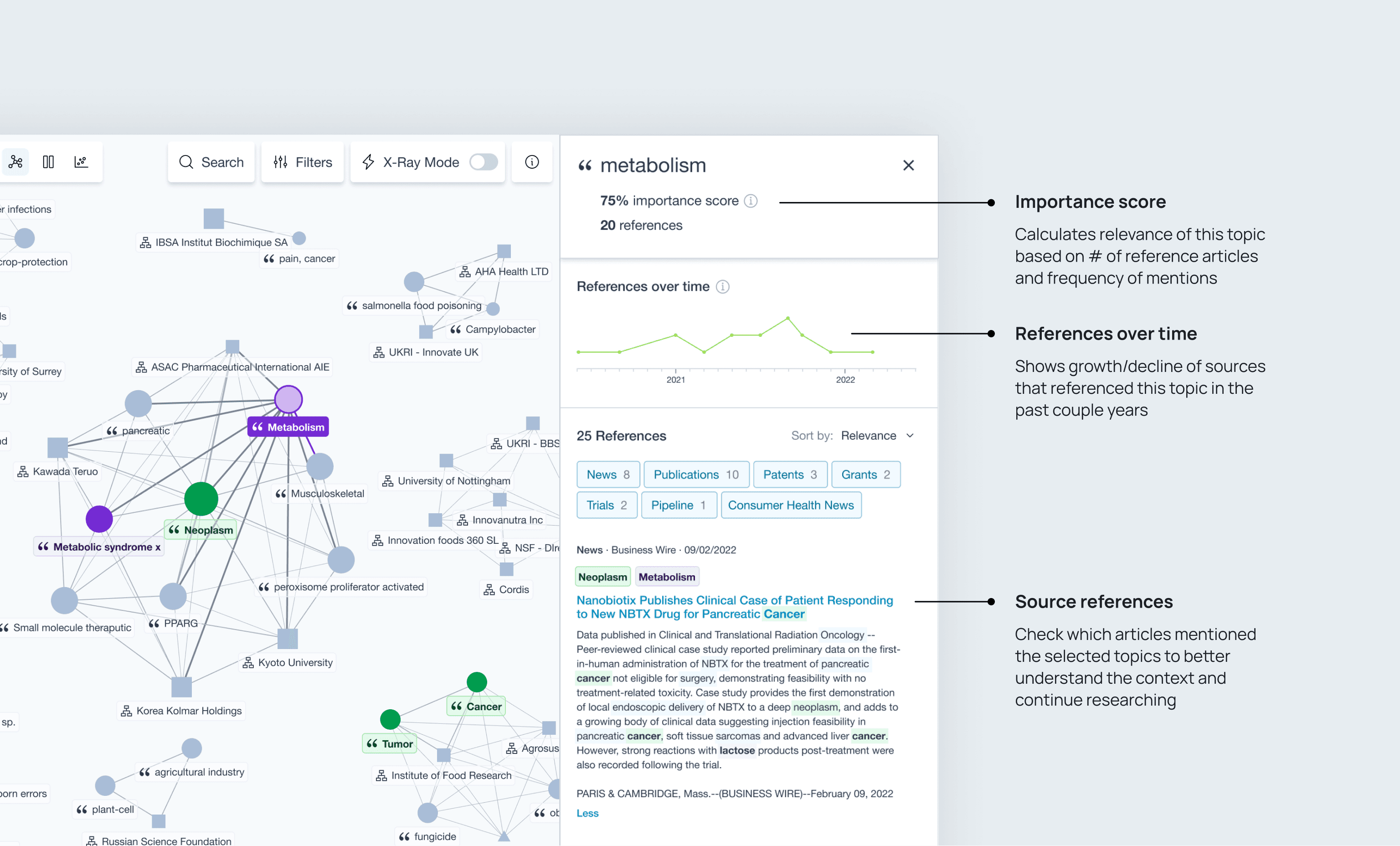
Digging deeper: Clicking a topic node opens a side panel to see associated articles and references for deeper investigation. We worked with the data science colleagues to integrate key features like 'Importance score', which indicates the keyword's frequency of article appearances and relevance to the original search query.
Continuous testing & refinement
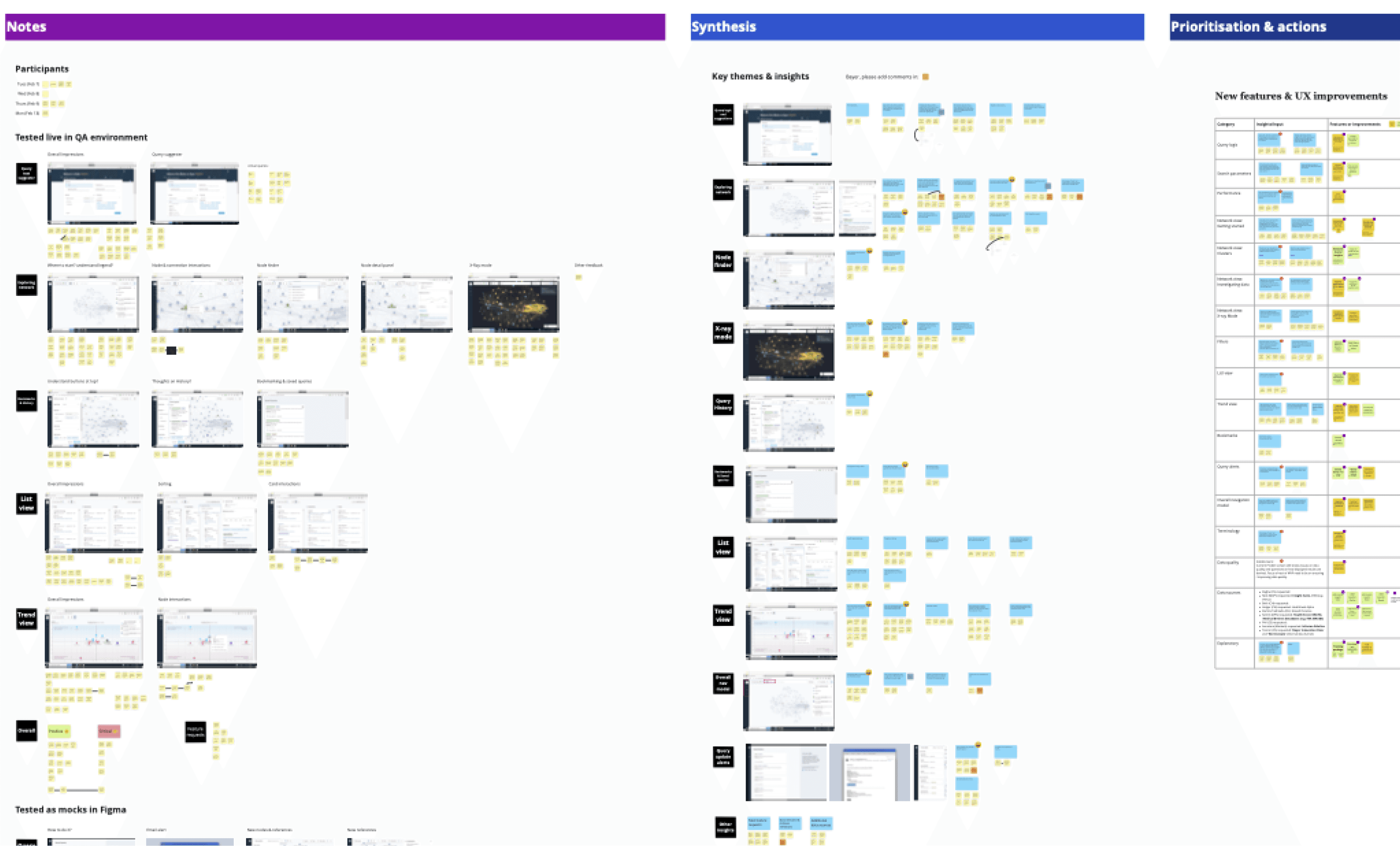
We ran 2 rounds of user testing with the PoC to refine the logic of how data points were categorised, as well as the logic for core features such as highlighting new nodes and upward trends. This was followed by another 3 rounds of testing during the MVP phase to validate the usability of new features rolled out each sprint.
We ran 2 rounds of user testing with the PoC to refine the logic of how data points were categorised, as well as the logic for core features such as highlighting new nodes and upward trends. This was followed by another 3 rounds of testing during the MVP phase to validate the usability of new features rolled out each sprint.
"This success is a powerful demonstration of how life science, data science and user design can be creatively combined to (positively) disrupt the way we generate insights and innovation for our company."
Senior Insights Solution Lead